

Project
Amphyra – The Future of Olive Oil
Partner
Carla Rotenberg
Year
2025
How might our food rituals evolve amid climate change, with science while preserving culture and pleasure?
Concept
Amphyra is a speculative product to create yeast oil at home. The name combines the Greek „Amphora“ (ancient oil vessel) and „Myra“ (oil).
Olive Oil, often called liquid gold, is highly affected by climate change, through droughts and plagues, leading to fraught by adulteration. Yet these kind of healthy fats remain essential to our diet.
Scientists are creating energy-friendly alternatives using a fermentation process with yeast (Trichosporon oleaginosus), which is fed with bread waste, and enzymes, which extract the produced lipids from the yeast. Through centrifuging, the oil is separated from the remaining liquid, requiring no additional energy nor toxic chemicals.
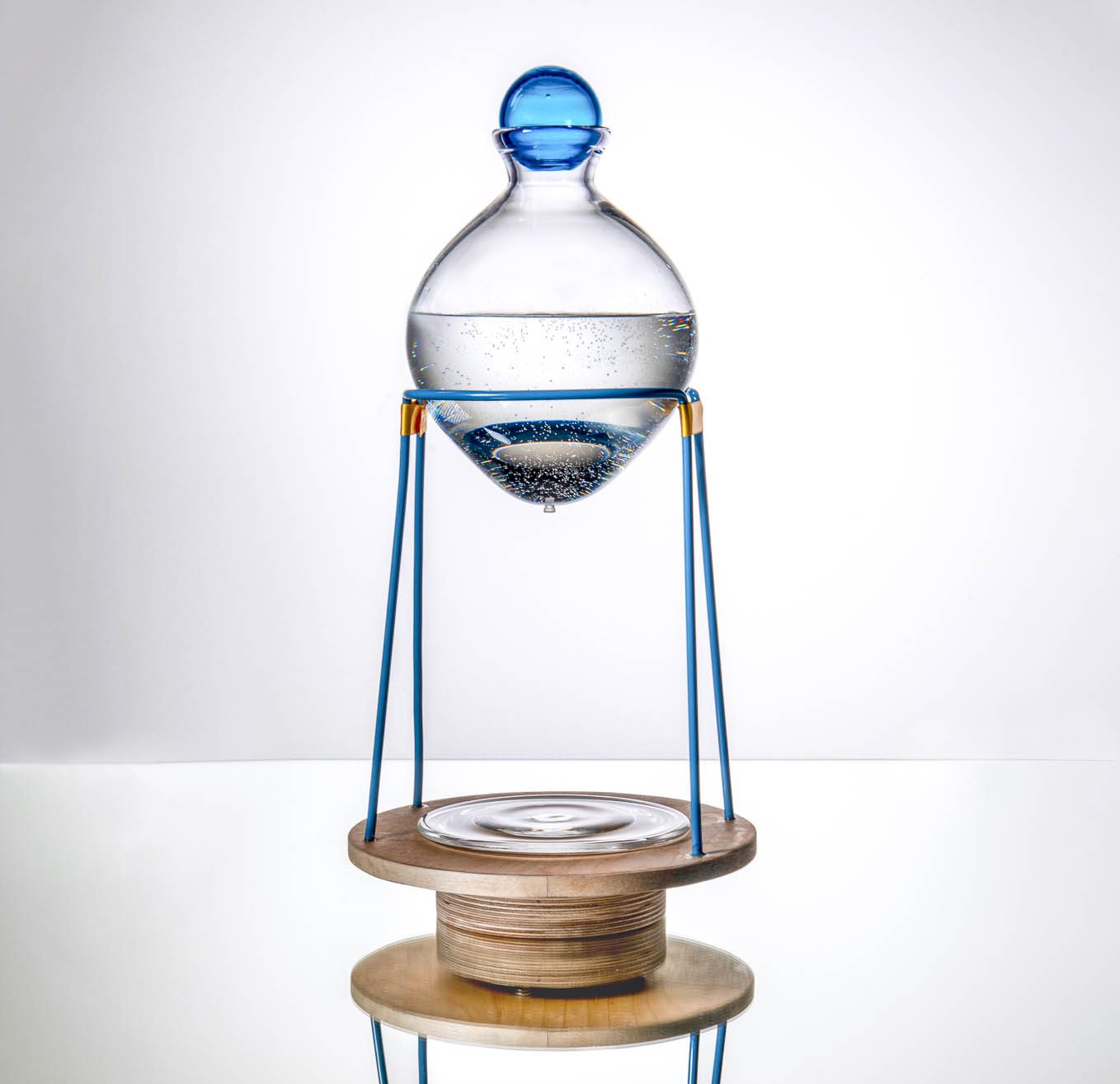
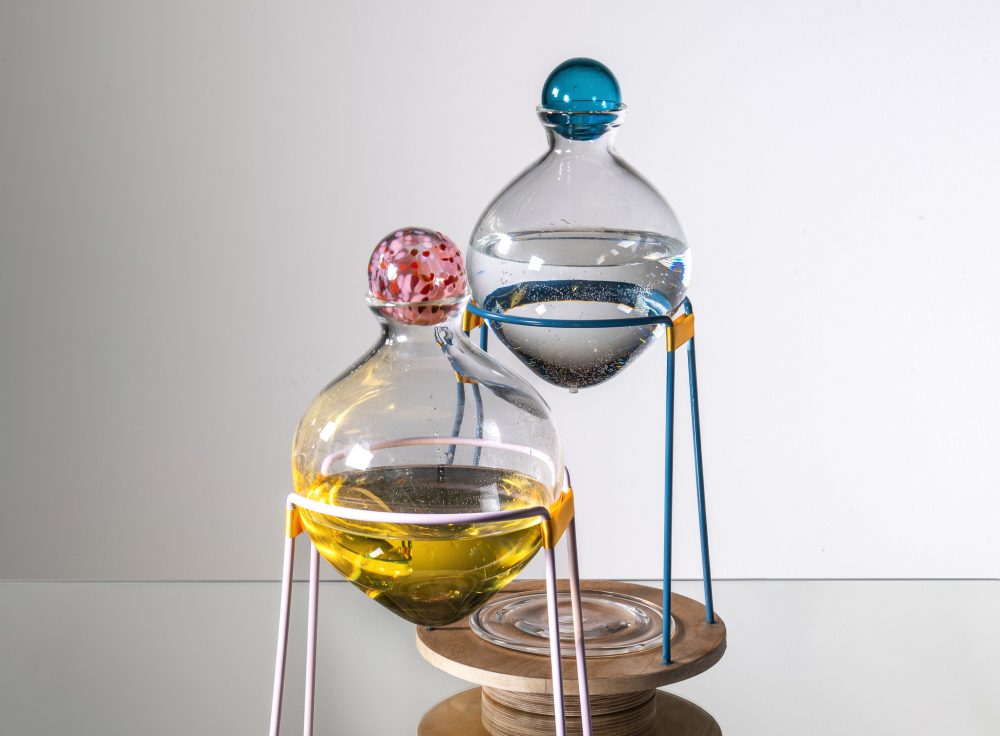
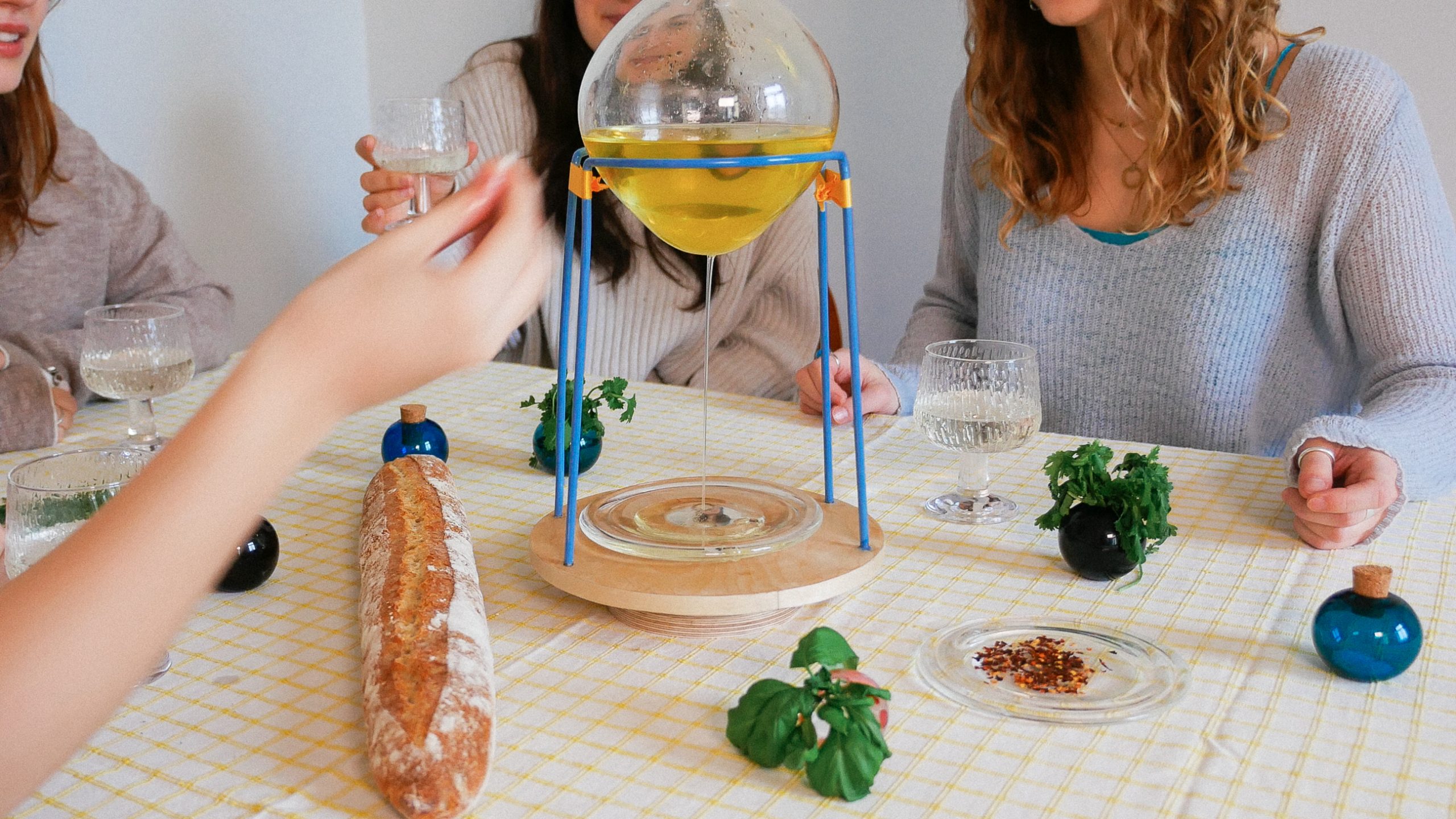
In a soon-to-be future, this oil production would be possible at home: Amphyra uses glass for its scientific properties and its cultural use in tableware. The main vessel shape meets scientific needs while evoking ancient oil production. A gentle push starts the structure spinning, mixing the ingredients and centrifuging the liquids, creating oil within one vessel.
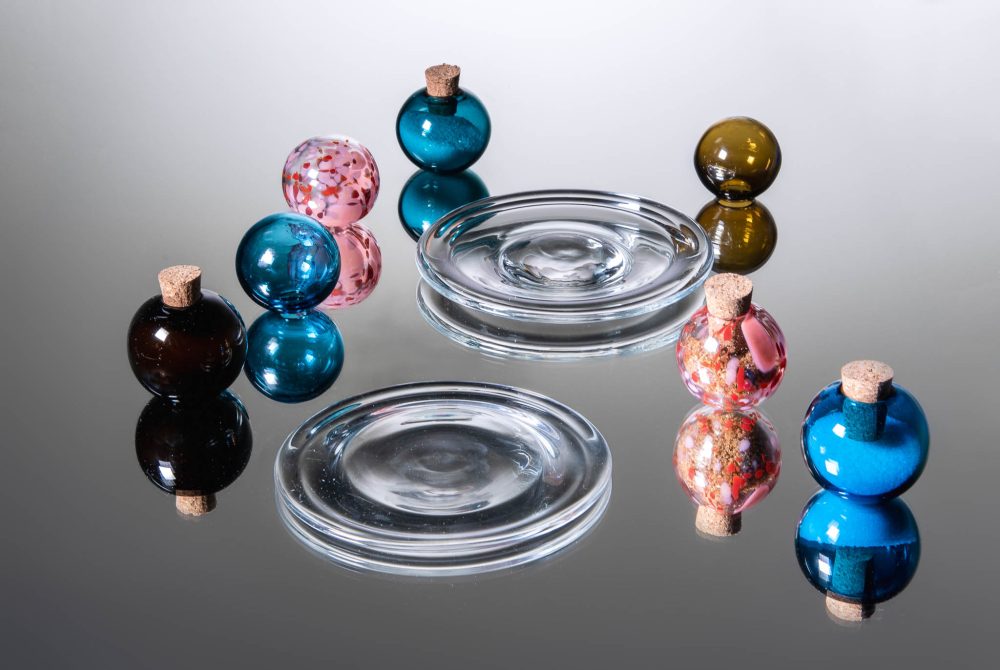
The different glass spheres portion, store and color-code the ingredients, serving simultaneously as lids. Rippled blown glass plates have been designed to harvest the oil and provide a pleasant dipping for the diners. In this way we hope to unite future food production with familiarity, craft and community.
Development
The project developed through a series of interconnected phases, beginning with scientific research into yeast-based oil production and a parallel exploration of the cultural history of olive oil and its vessels. Early findings around the yeast Trichosporon oleaginosus informed the technical foundation, while historical references such as amphorae and contemporary cruets shaped the conceptual direction.
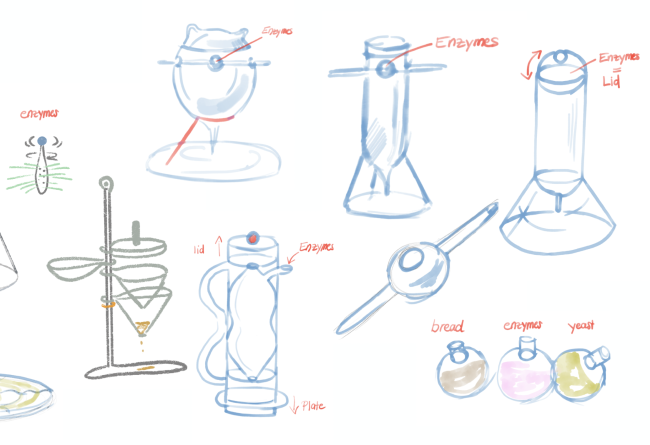
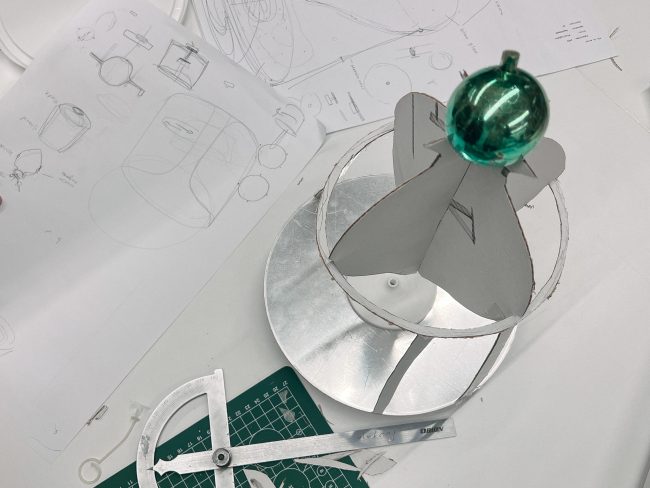
From this basis, the idea for Amphyra emerged as a way to translate laboratory processes into a domestic context. Initial concepts were explored through iterative sketching and physical prototyping, with cardboard models used to refine form, proportions, and the mechanics of rotation. This hands-on approach allowed the integration of fermentation, enzymatic extraction, and centrifugal separation into a single, cohesive system powered by manual motion.
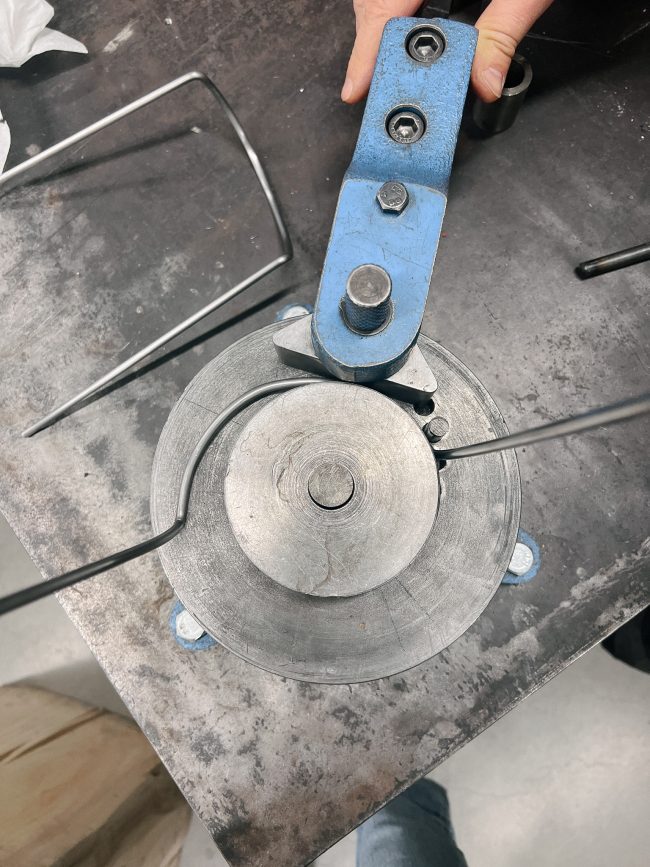
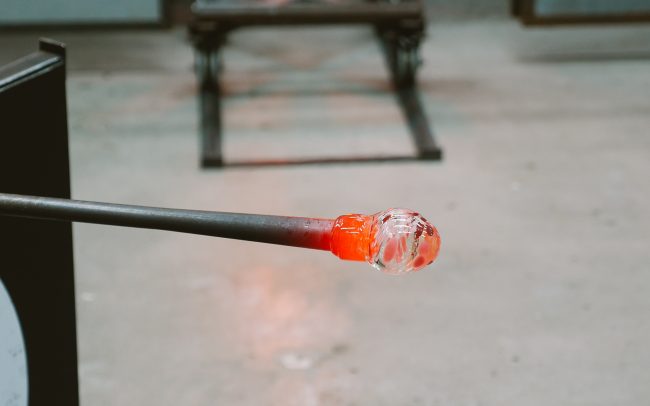
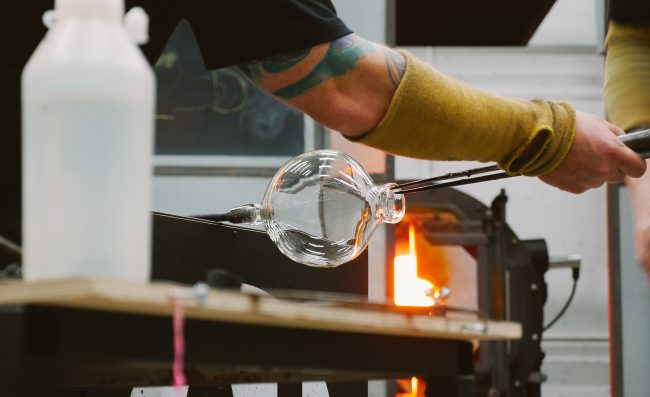
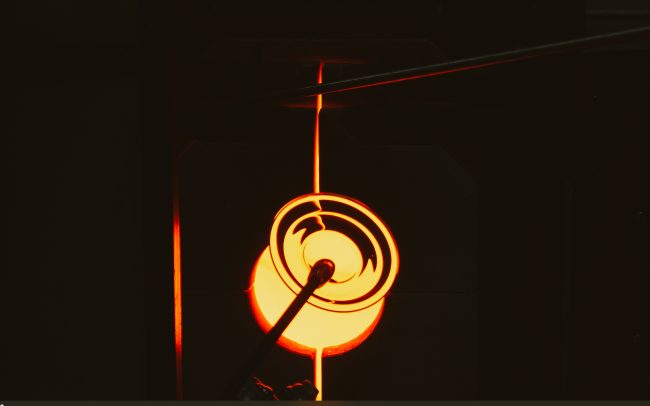
As the design evolved, equal emphasis was placed on functionality and symbolic meaning. Material choices played a key role: glass was selected for its inert properties and cultural associations, while modular, hand-blown components were developed in collaboration with glassblowers to ensure both precision and aesthetic clarity. In parallel, a supporting structure combining CNC-cut wood and bent metal was engineered to provide stability and enable controlled rotation.
Storytelling
The final stage of the project extended beyond the object itself into a speculative narrative. This took the form of a filmed “future olive oil tasting,” where participants engaged with the yeast-based oil and reflected on its cultural significance. Through this scenario, the project situates itself within a broader continuum, linking historical traditions of oil production with possible future practices.
Glass Blowers
Zachary Compton & Slate Grove
Studio Pictures
Anne Kinnunen