
Project
On Wonder
Partner
Concept Development in collaboration with Malu Lücking
Year
2026
How can designing with bioluminescent dinoflagellates reshape our relationship with light?
Concept
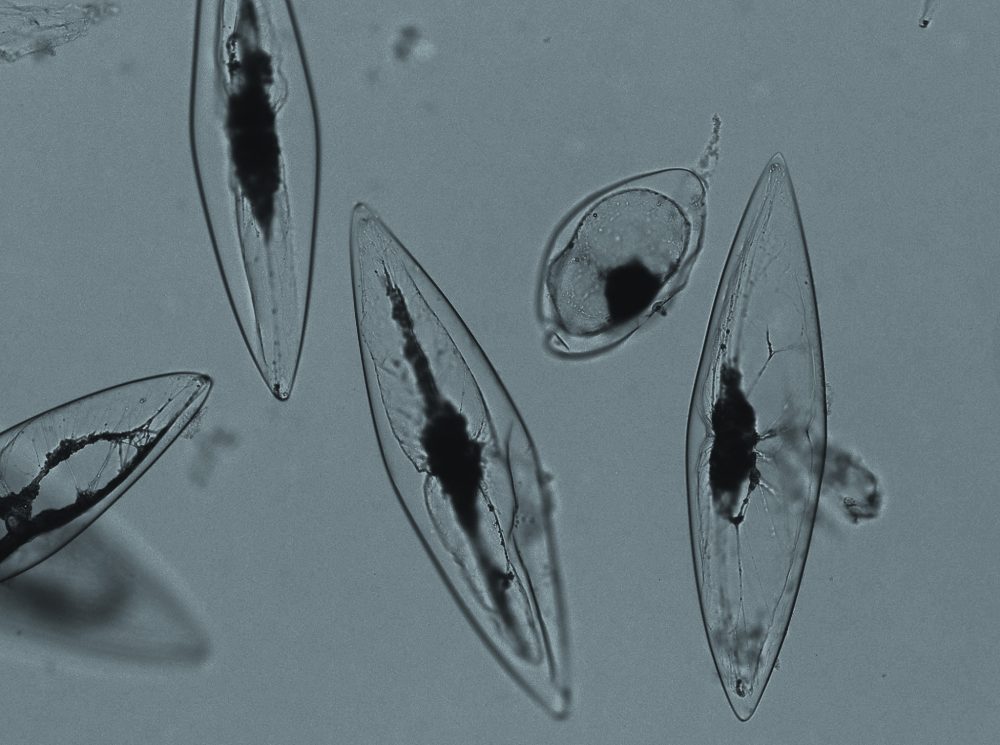
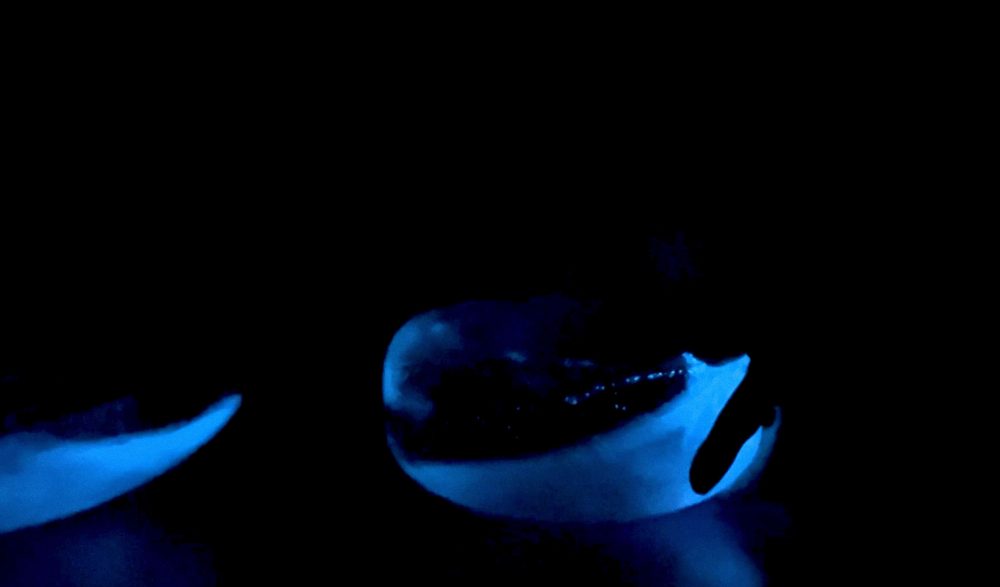
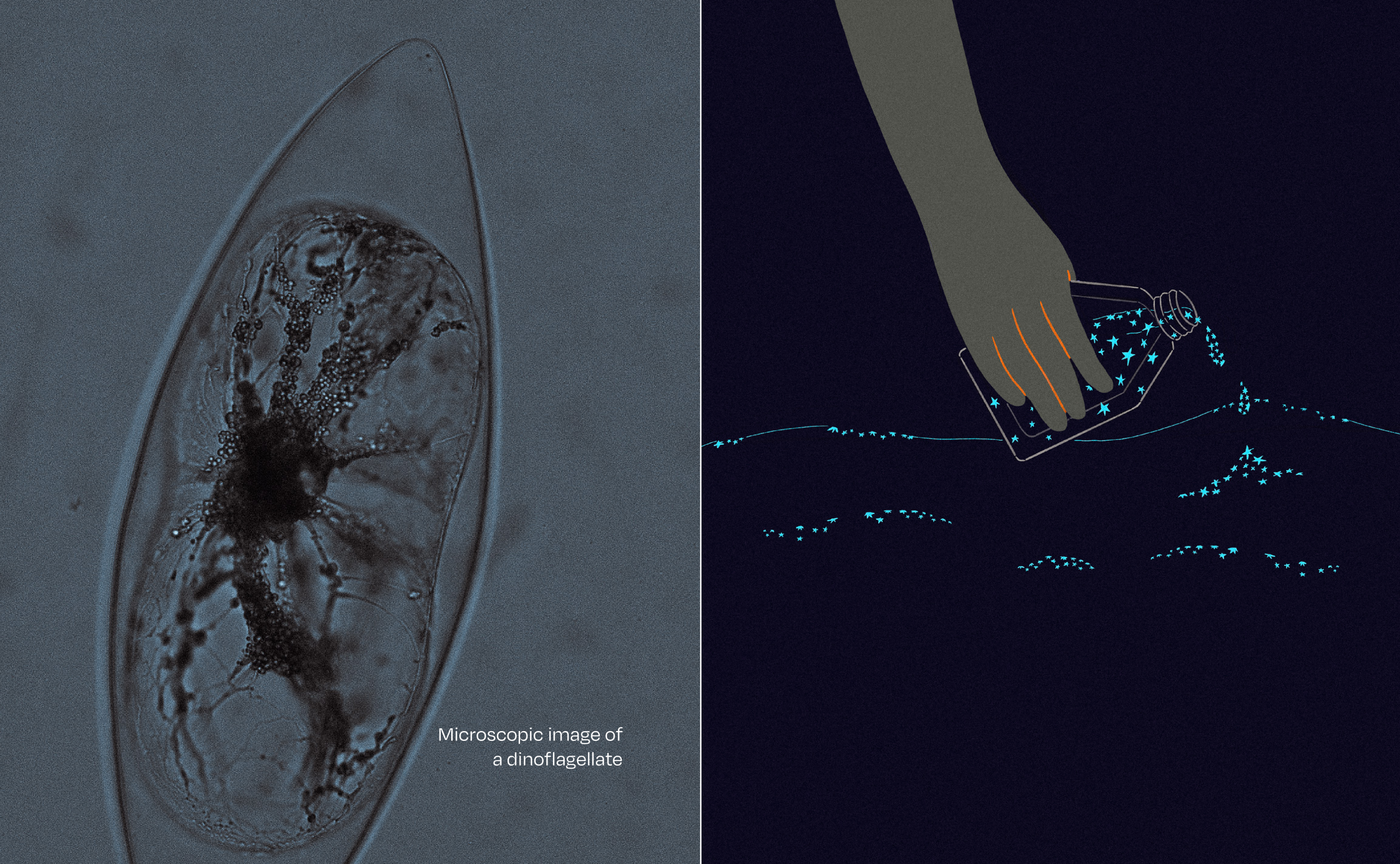
This project explores the potential of bioluminescent microalgae as a form of living light and investigates how design can foster new reciprocal relationships between humans and microorganisms. Bioluminescence is the production of light by living organisms and is thought to have evolved billions of years ago. Today, it is found across a remarkable diversity of species, from deep-sea creatures and forest fungi to fireflies and microscopic marine algae. Among these organisms are dinoflagellates: single-celled marine microalgae that emit flashes of blue light when the surrounding water is disturbed, creating one of nature’s most captivating nocturnal phenomena. In dinoflagellates, light is produced through the oxidation of luciferin, catalysed by the enzyme luciferase. Their bioluminescence is believed to serve defensive functions by startling predators or attracting larger predators that prey on the initial attacker. Light emission follows the organisms‘ circadian rhythm, making darkness an essential part of their life cycle.
Rather than treating dinoflagellates as materials or technological tools, this research positions them as collaborators with their own rhythms, sensitivities, and agencies. By learning from and designing with these organisms, the project adopts a more-than-human approach to design. Instead of placing humans at the centre of the design process, this perspective recognises humans as part of interconnected ecological systems and considers non-human organisms as active participants in shaping design outcomes. Through field research in bioluminescent bays in Mexico, laboratory cultivation, and the development of a series of interactive glass artefacts, the project explores how living light can encourage practices of care, reciprocity, and coexistence, while inviting us to reconsider our relationship with light itself.
Field Research
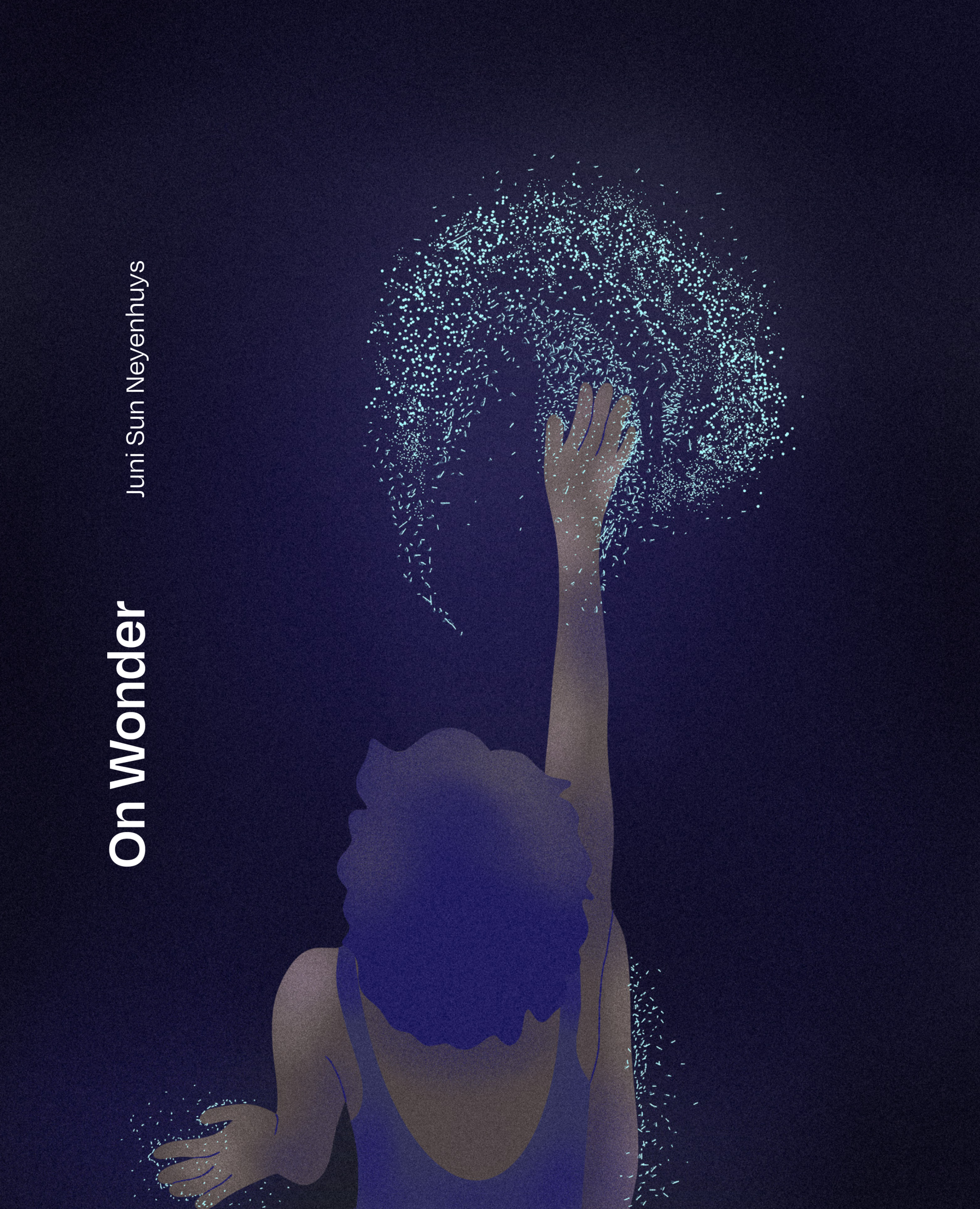
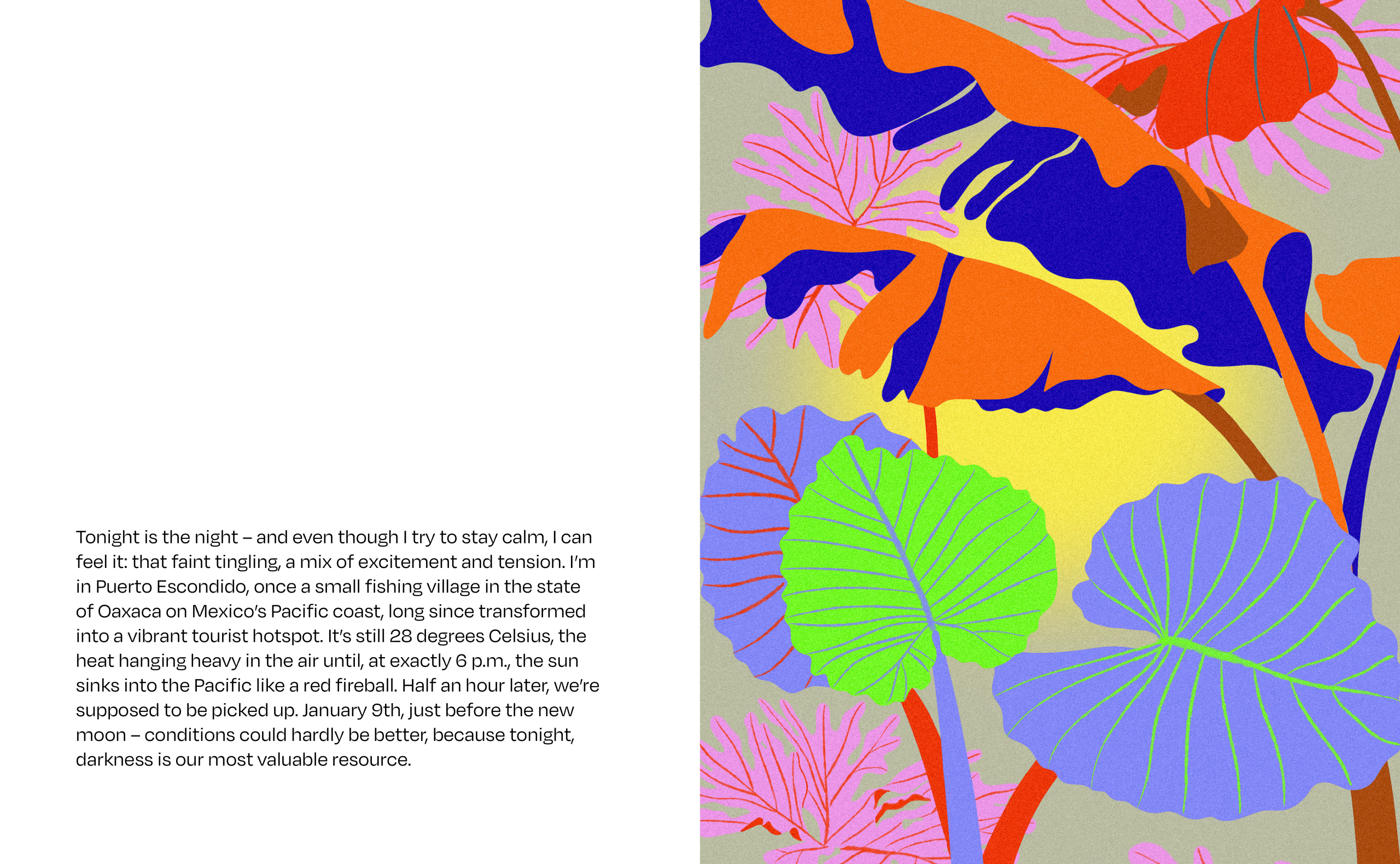
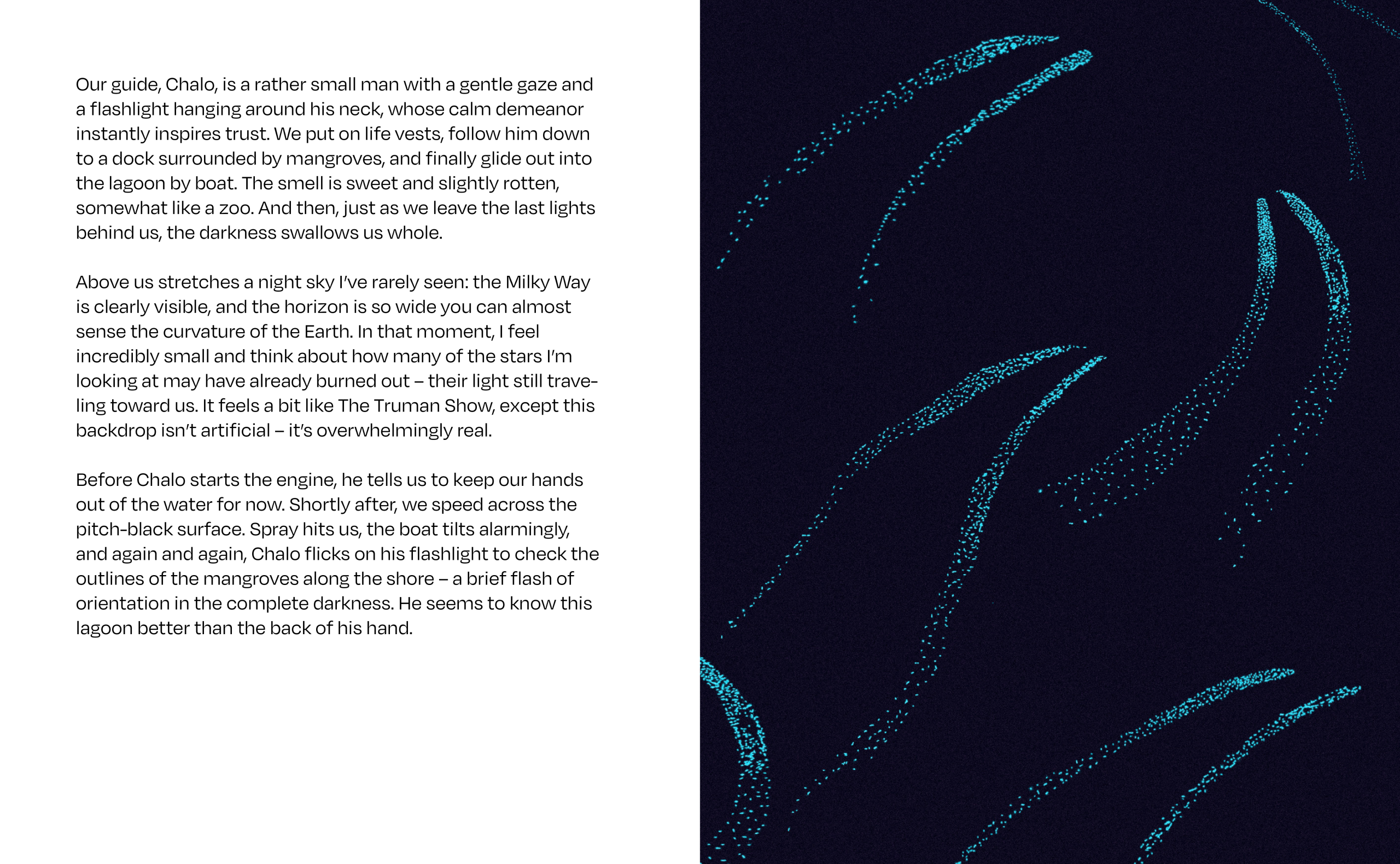
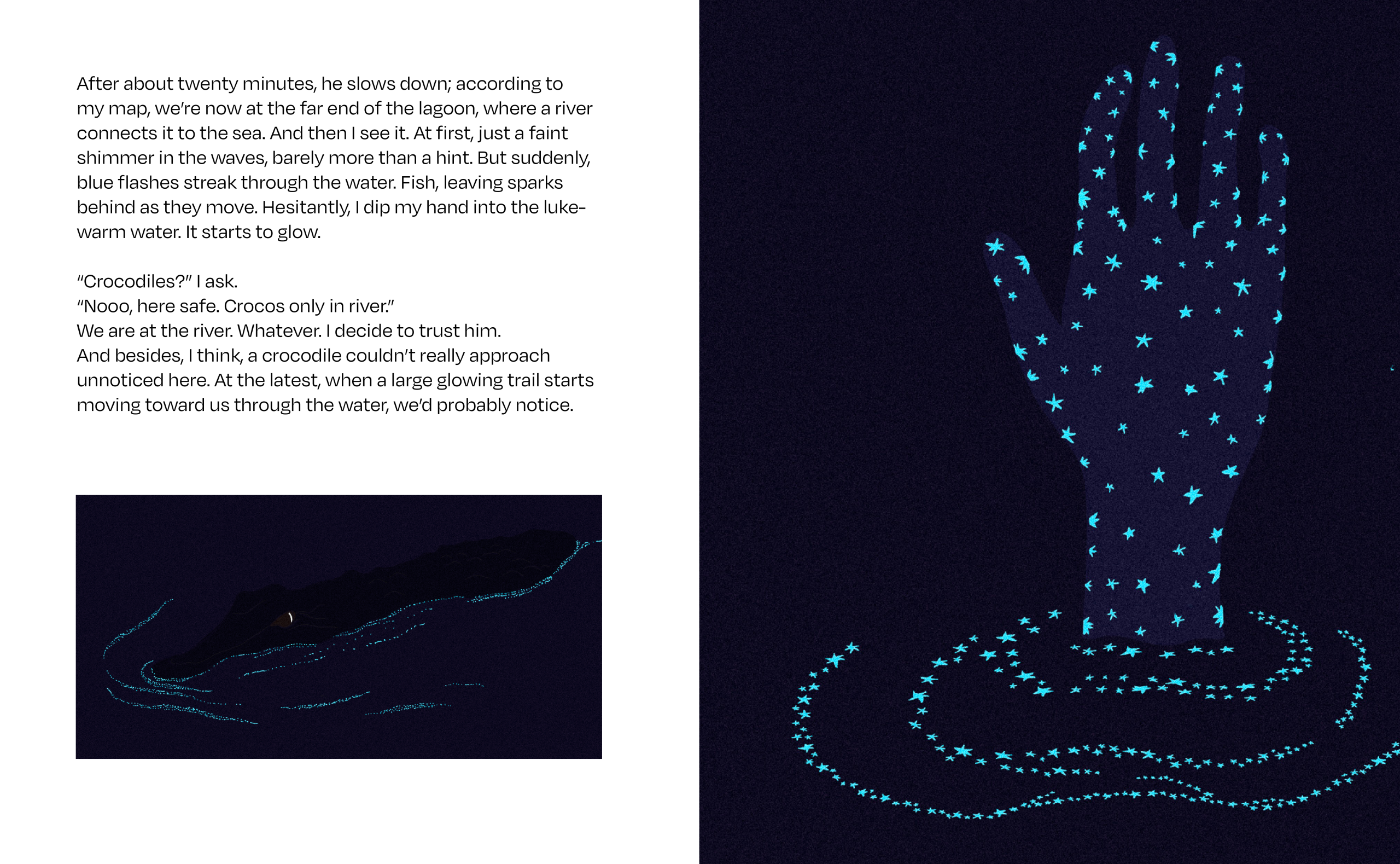
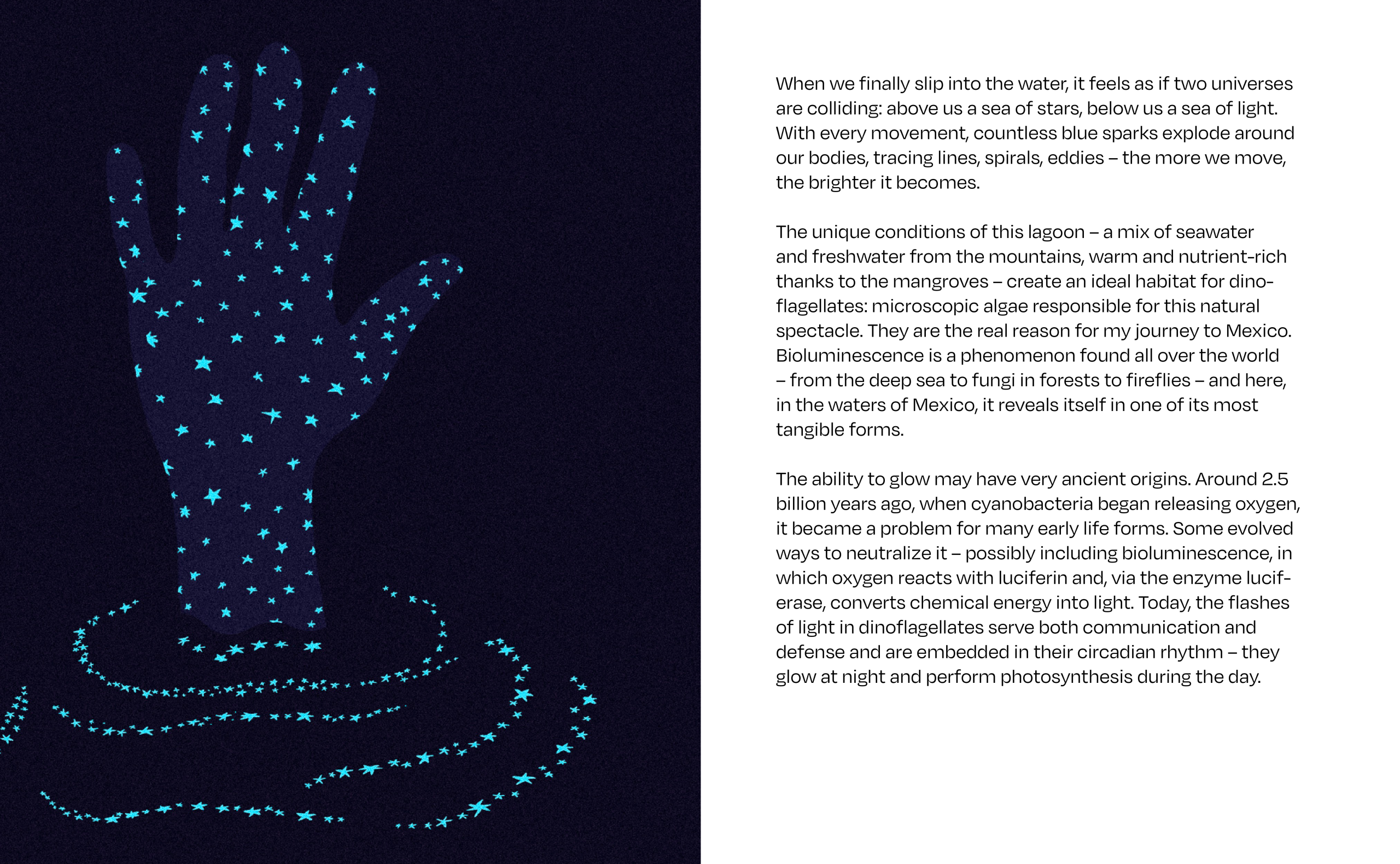
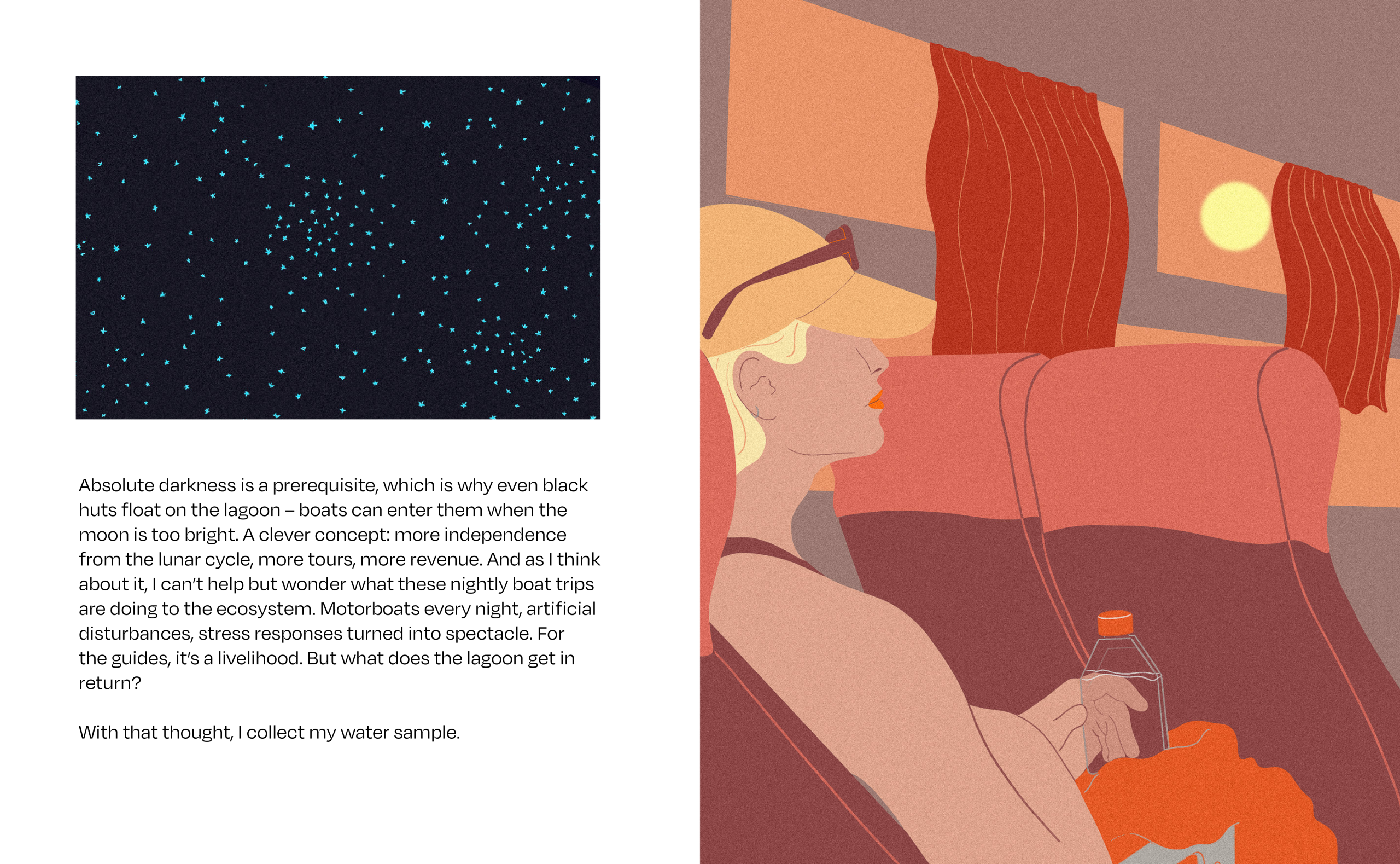
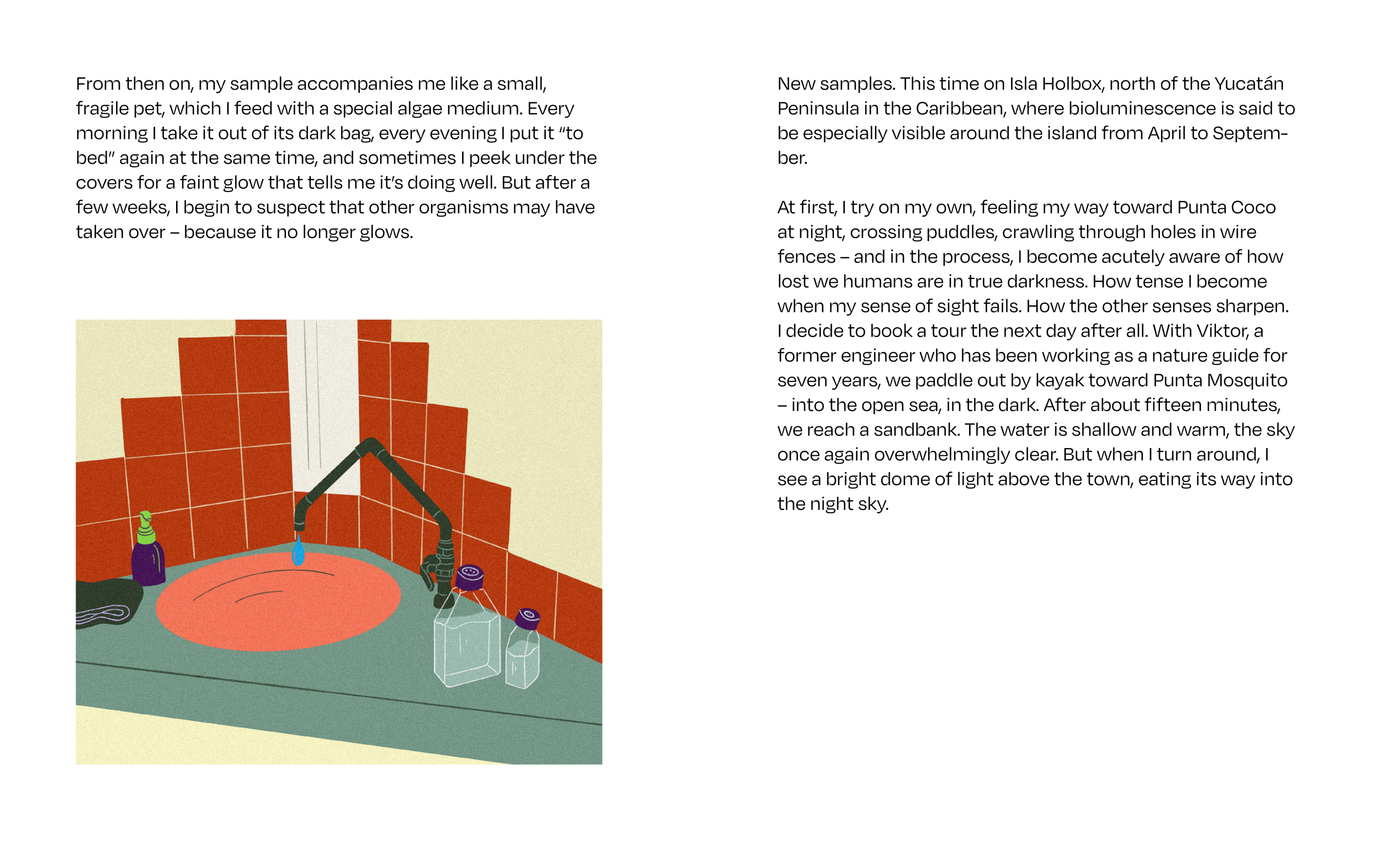
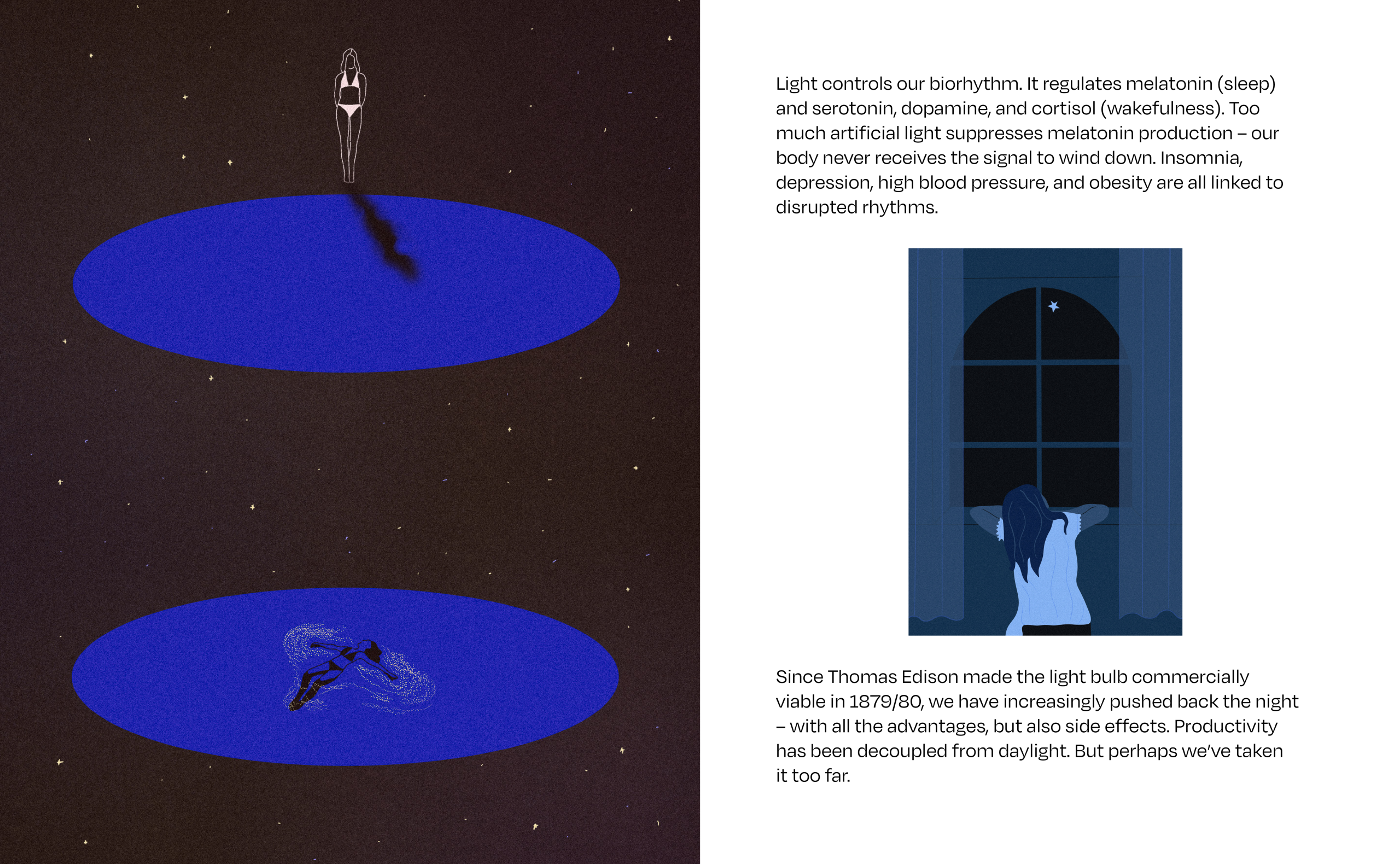
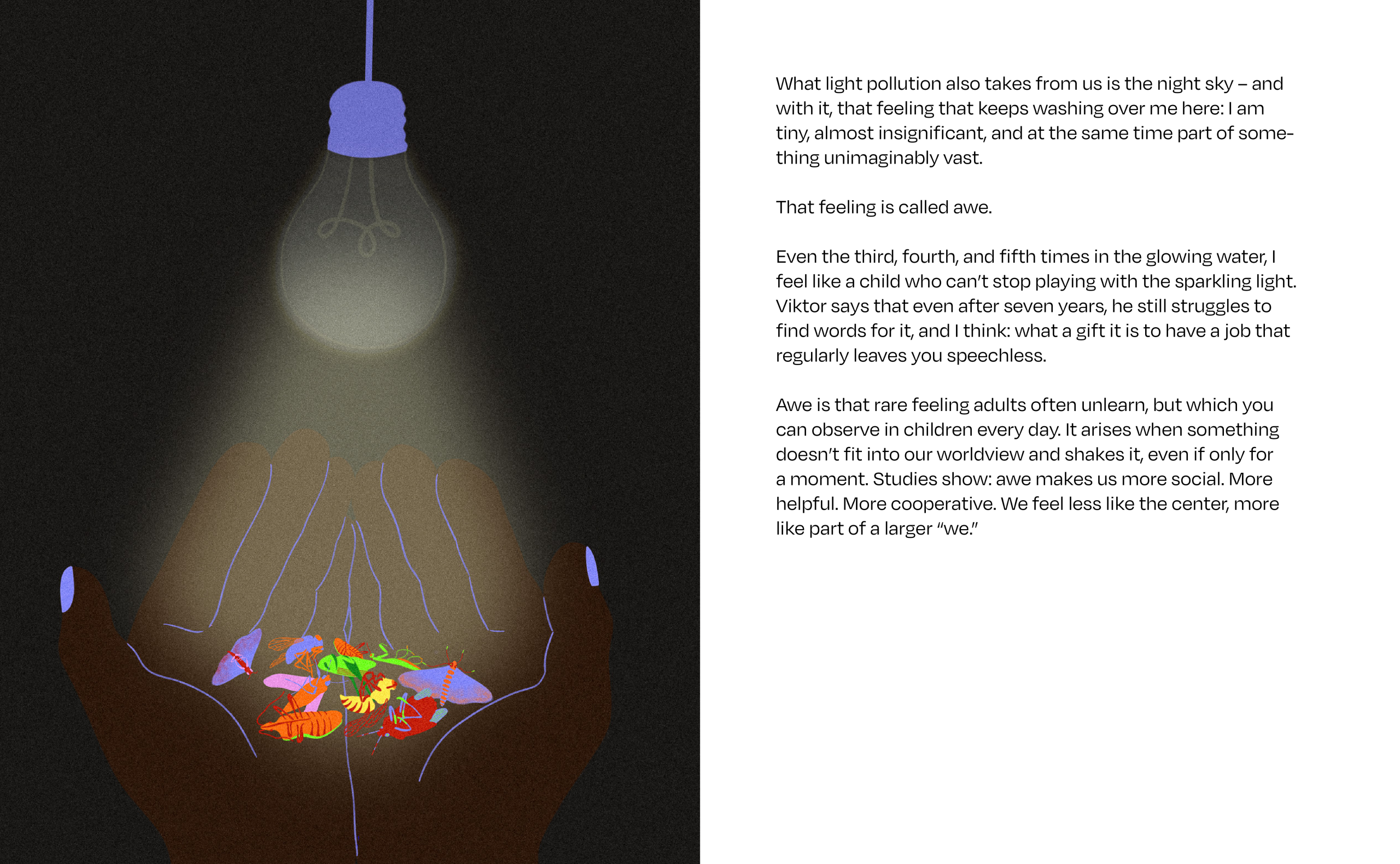
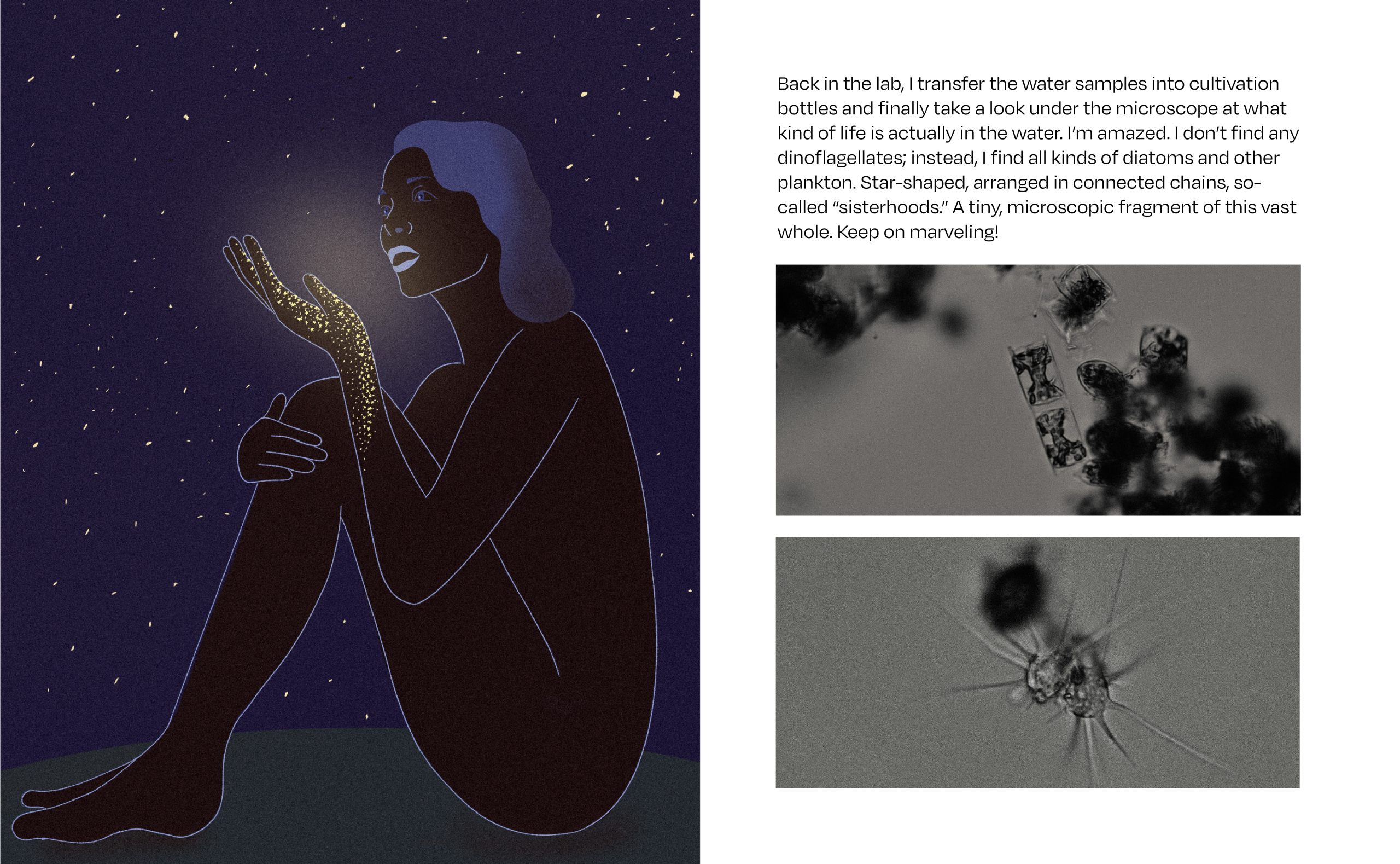
The project began with a field trip to Mexico to experience bioluminescence in its natural context. Observing glowing coastal waters, collecting water samples, and speaking with local guides provided first-hand insights into the ecological conditions that enable bioluminescence and laid the foundation for the subsequent laboratory research and design development. The journey was documented through illustrations, personal reflections, and scientific observations, resulting in the visual essay On Wonder.


Lab Research
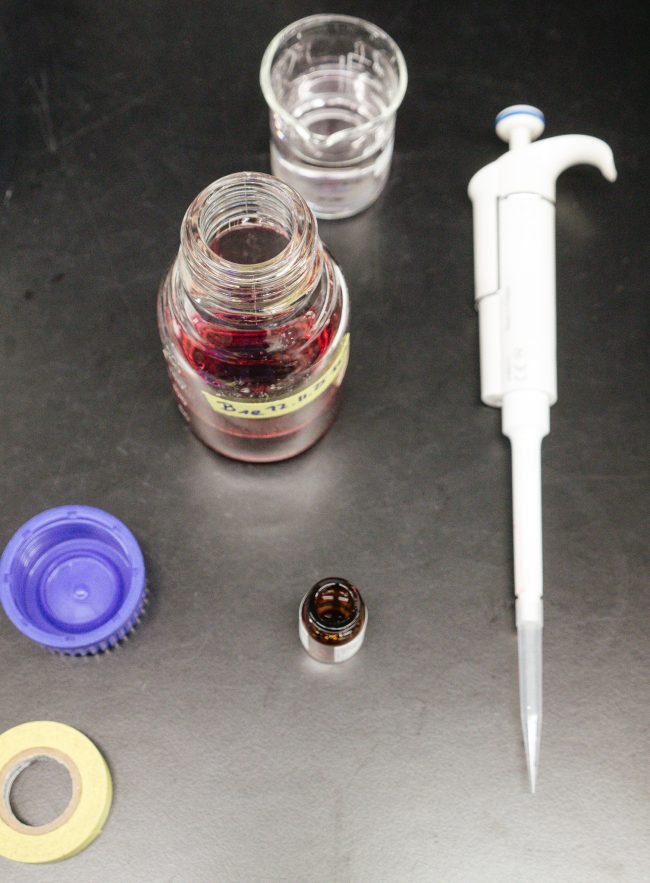
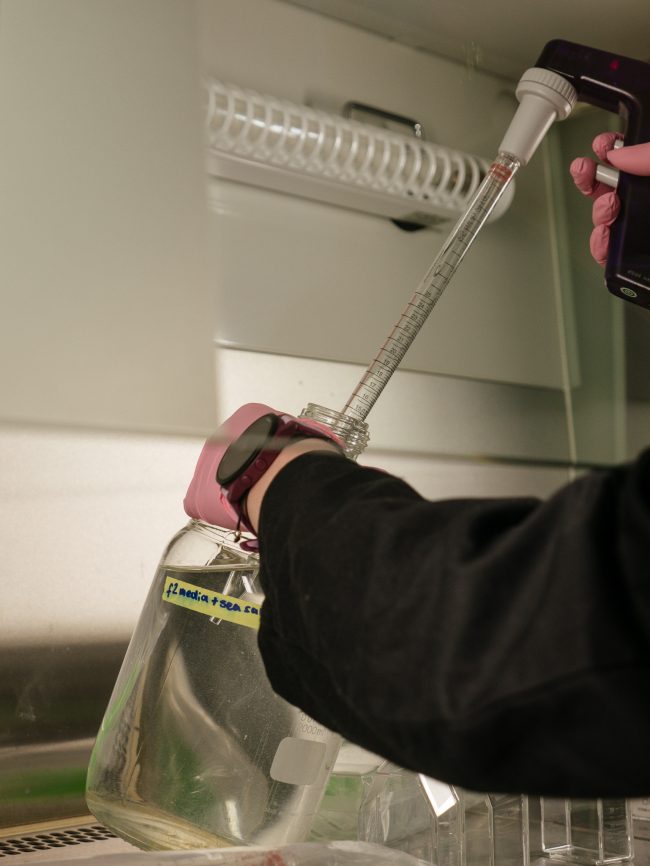
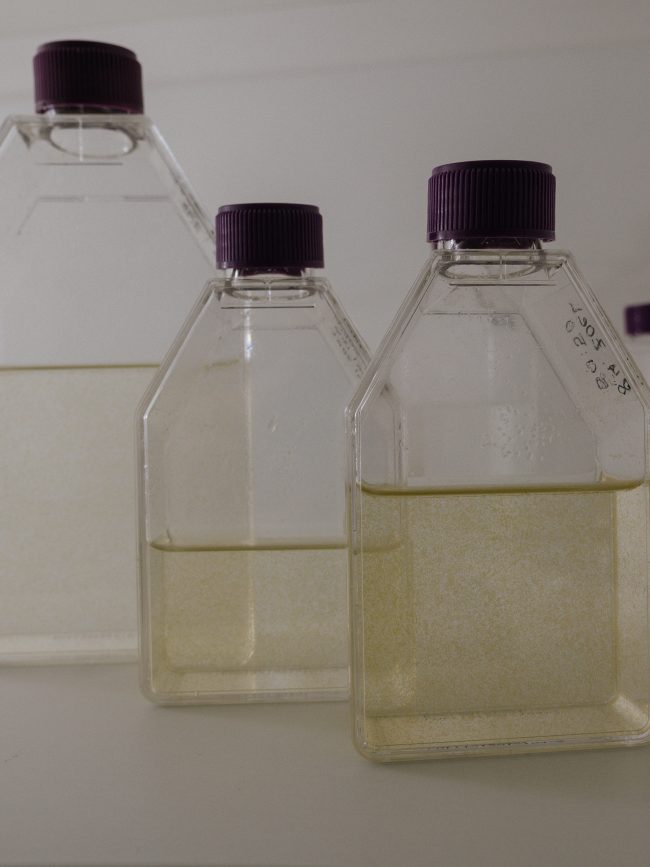
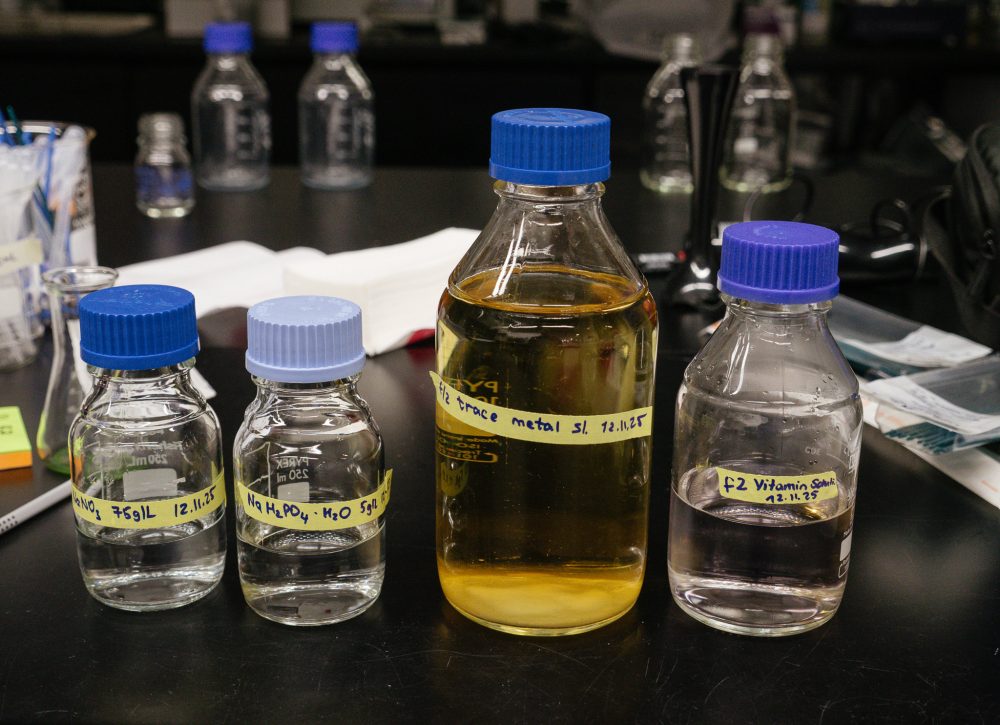
The laboratory research focused on identifying the optimal cultivation conditions for the bioluminescent dinoflagellate Pyrocystis fusiformis. Based on literature research, different growth media and
cultivation parameters were prepared and tested. The process involved considerable trial and error before a stable cultivation setup was established.
Designing with living organisms differs fundamentally from designing with conventional materials. The design space is defined not only by human needs and technical feasibility but also by the biological requirements of the organism. Dinoflagellates require a carefully regulated day-night cycle, temperatures between 16–25 °C, sufficient gas exchange, and regular feeding. Their blue light is emitted only in response to mechanical stimulation and lasts only a short time before the organisms need to recover. These findings revealed that the greatest challenge was not cultivating the microorganisms, but learning to design around their rhythms and needs. Rather than treating these biological constraints as limitations, the project embraces them as a starting point for rethinking how we might design with living systems.
Concept Design
The cultivation of dinoflagellates revealed a relationship of reciprocity. Unlike conventional light sources, these microorganisms require continuous care to thrive. They depend on stable environmental conditions, regular feeding, and respect for their natural rhythms. In return, they respond with their bioluminescent glow, making care immediately visible. Rather than treating light as an endlessly available resource, the project invites us to understand it as a relational phenomenon – one that emerges through attention, coexistence, and mutual dependence.
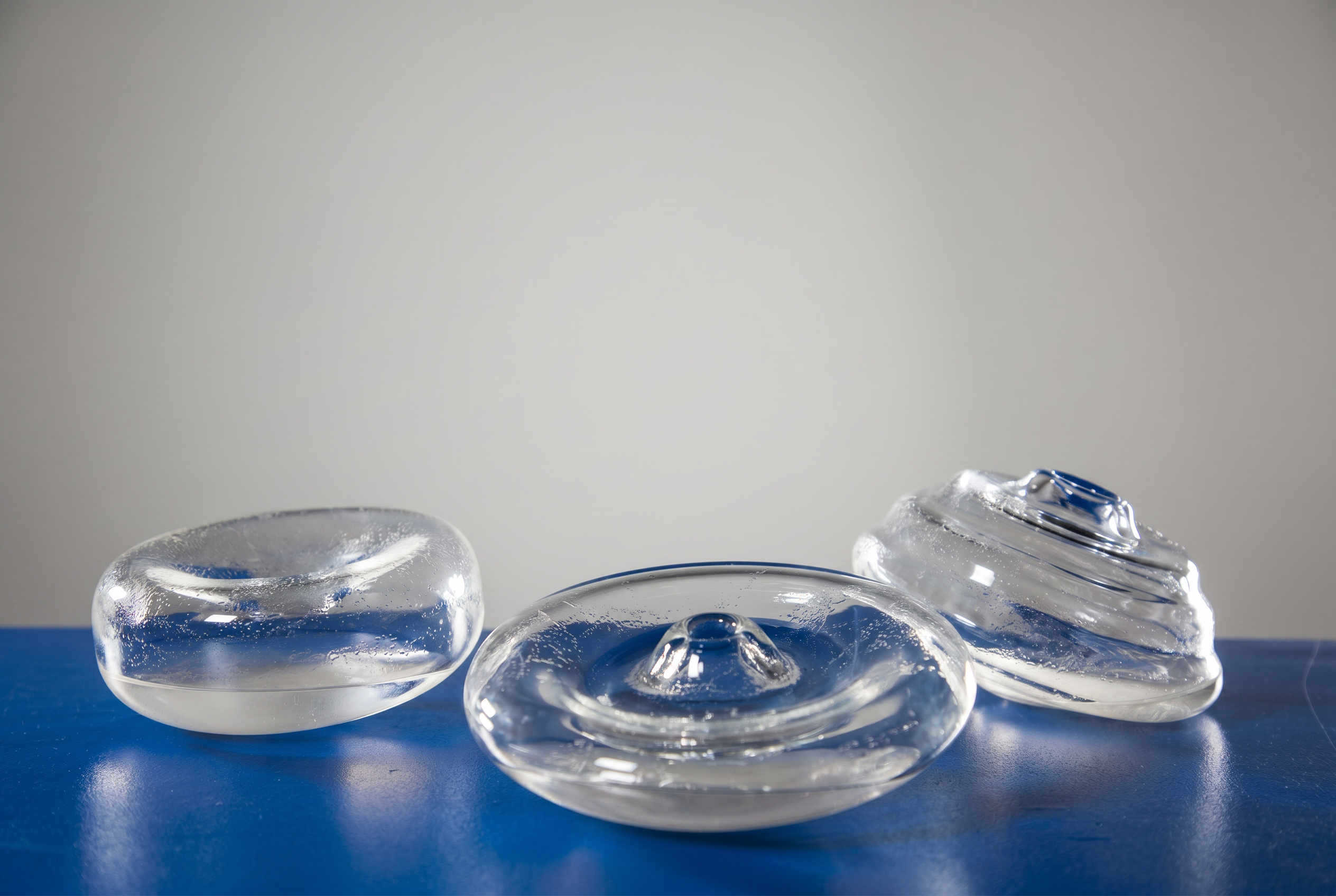
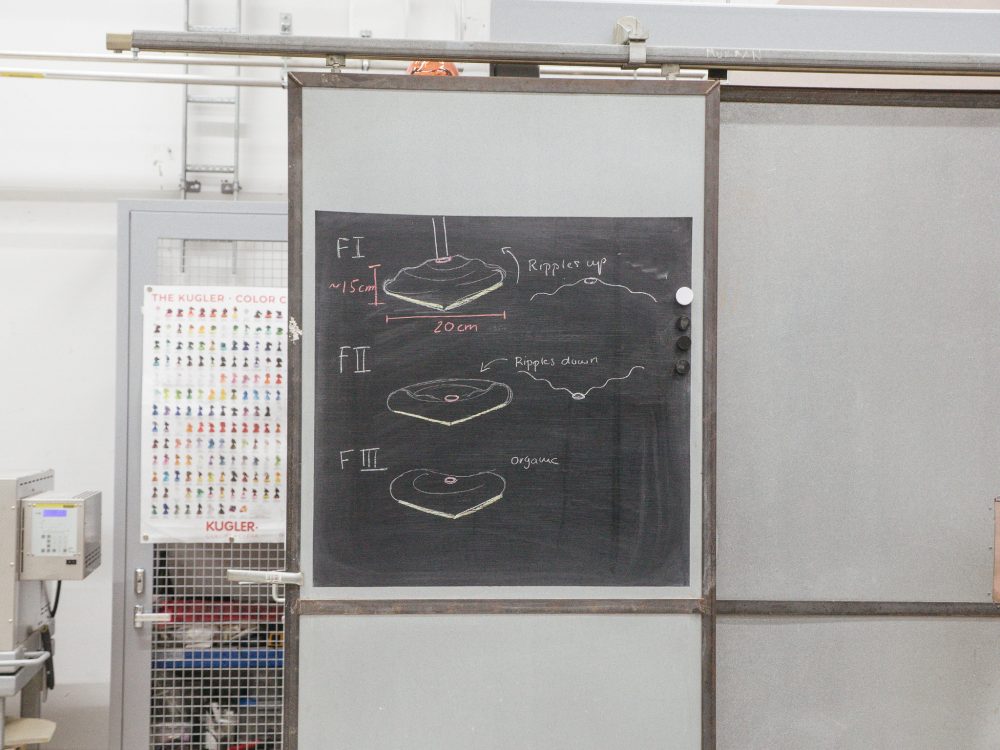
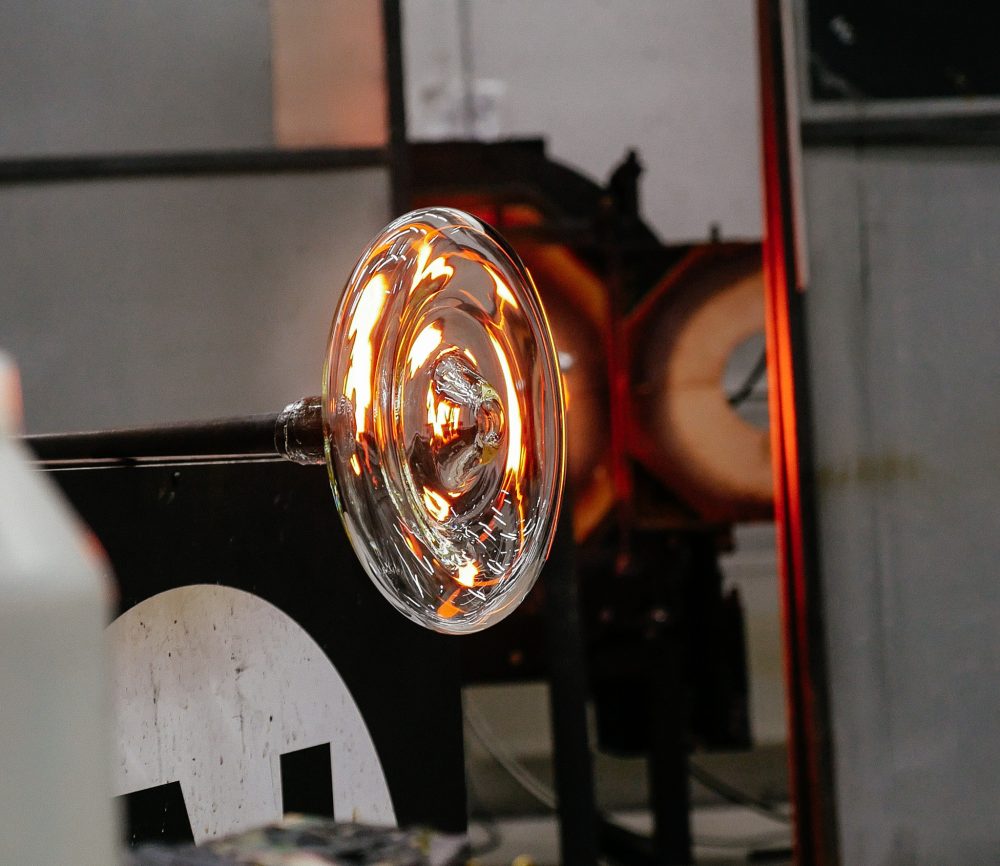
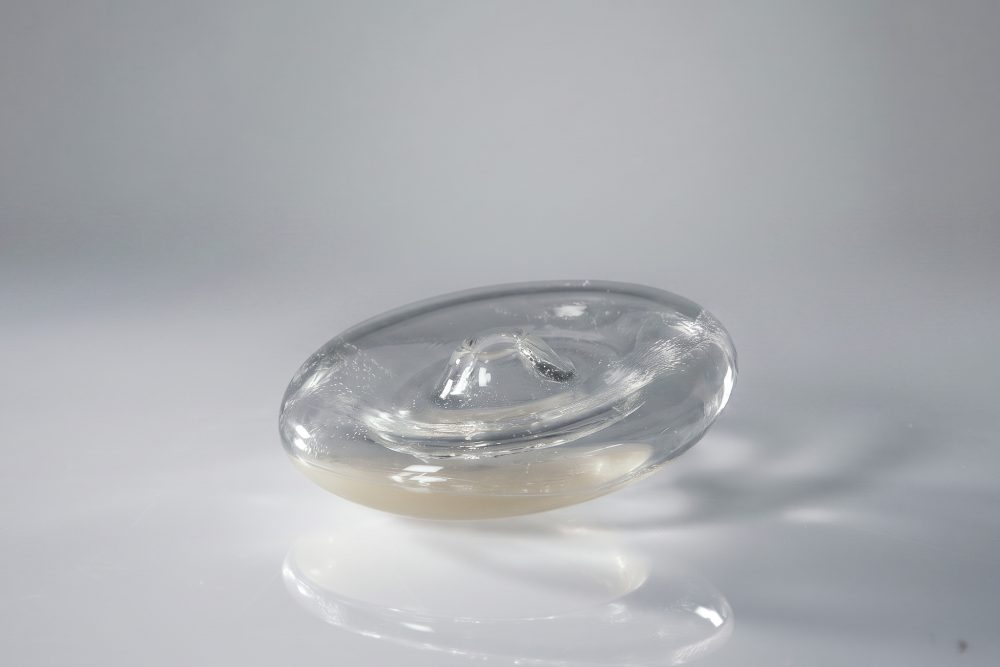
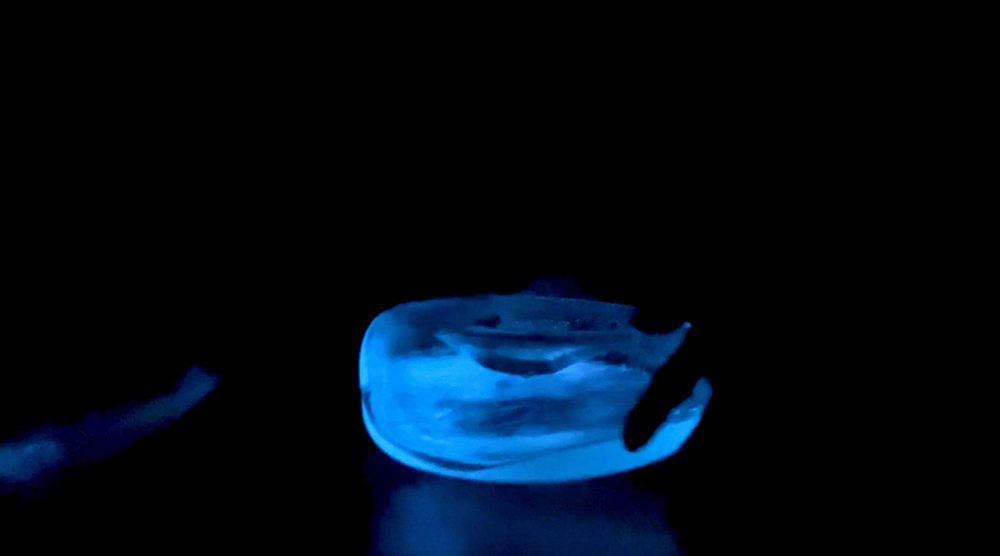
The artefacts consist of three hand-blown glass vessels containing seawater and bioluminescent dinoflagellates. Their conical base and rippled upper surface are inspired by the frozen moment when a drop of water meets the ocean. Designed to be gently set in motion, the vessels mechanically stimulate the microorganisms, causing them to emit flashes of soft blue light. This interaction transforms the viewer from a passive observer into an active participant, creating a direct and embodied encounter with living light. Rather than functioning as a conventional lamp, the artefact invites us to slow down, engage with another species, and reflect on our relationship with light, care, and the more-than-human world.