

Project
Re.Code
Partner
Suzan Camlik
Rebecca van de Sand
Lobke Beckfeld
Textile Prototyping Lab
Textilforschungsinstitut Thüringen Vogtland
Sächsisches Textilforschungsinstitut
Year
2020
How can we transform natural fibre waste into durable textiles that are emotionally enganging?
Concept
„Waste is nothing more than a symptom of a failed relationship. We are consumers of meaning and not matter.“ (Jonathan Chapman, Emotionally Durable Design, 2015).
Nowadays discarding nearly-new textiles and clothing has become a cultural practice. The origin of the problem may lie in the failed emotional attachment to the object. The resulting symptoms are masses of textile waste. Re.Code wants to counteract both the short life span of textiles and clothing and the growing amounts of textile waste created throughout the production and consumption cycles.
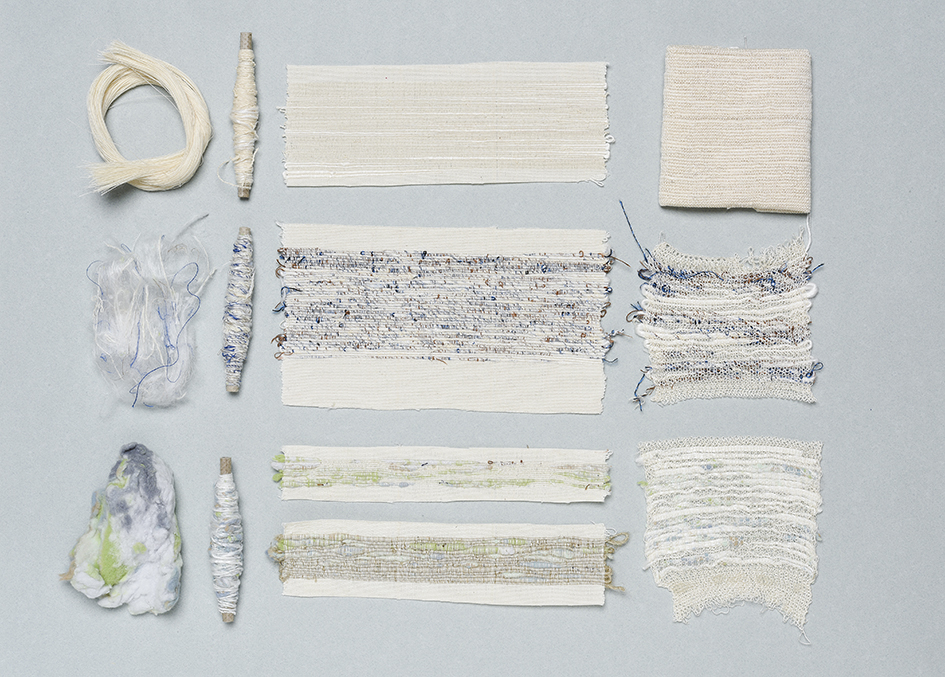
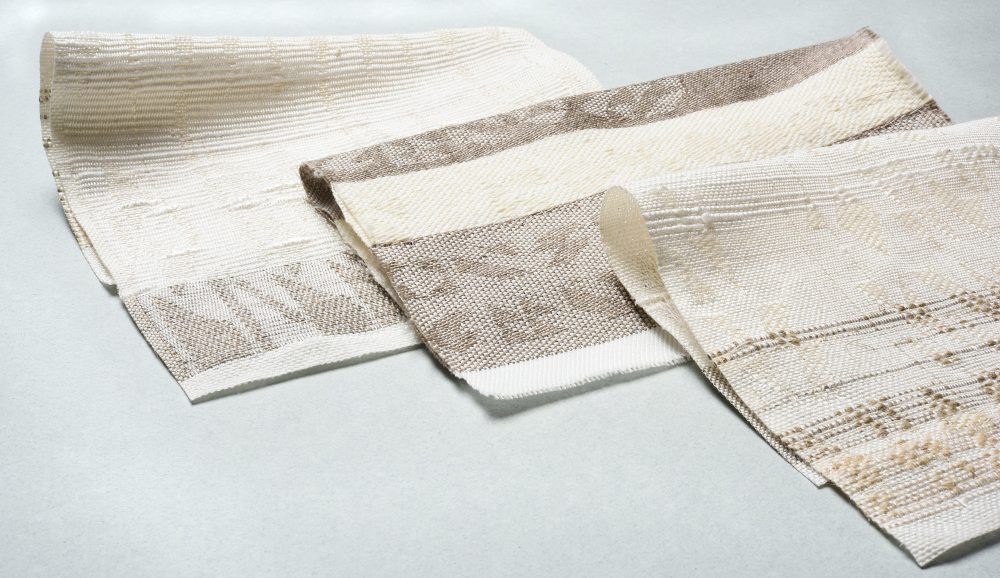
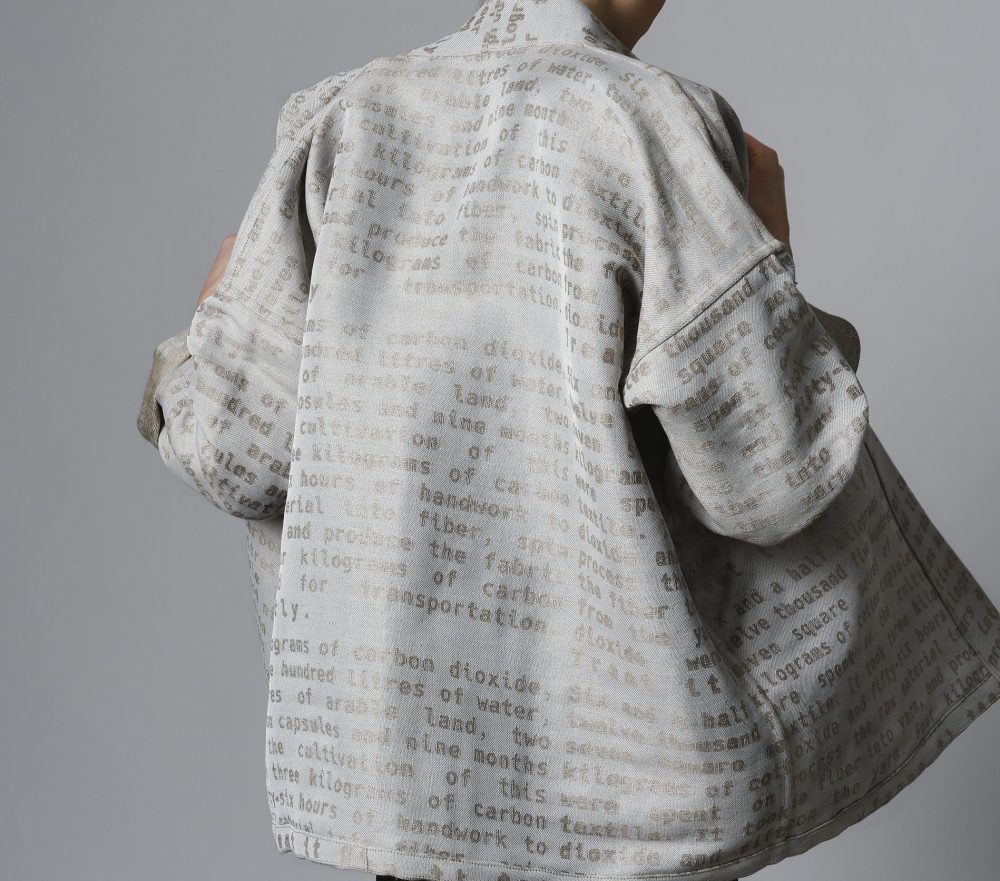
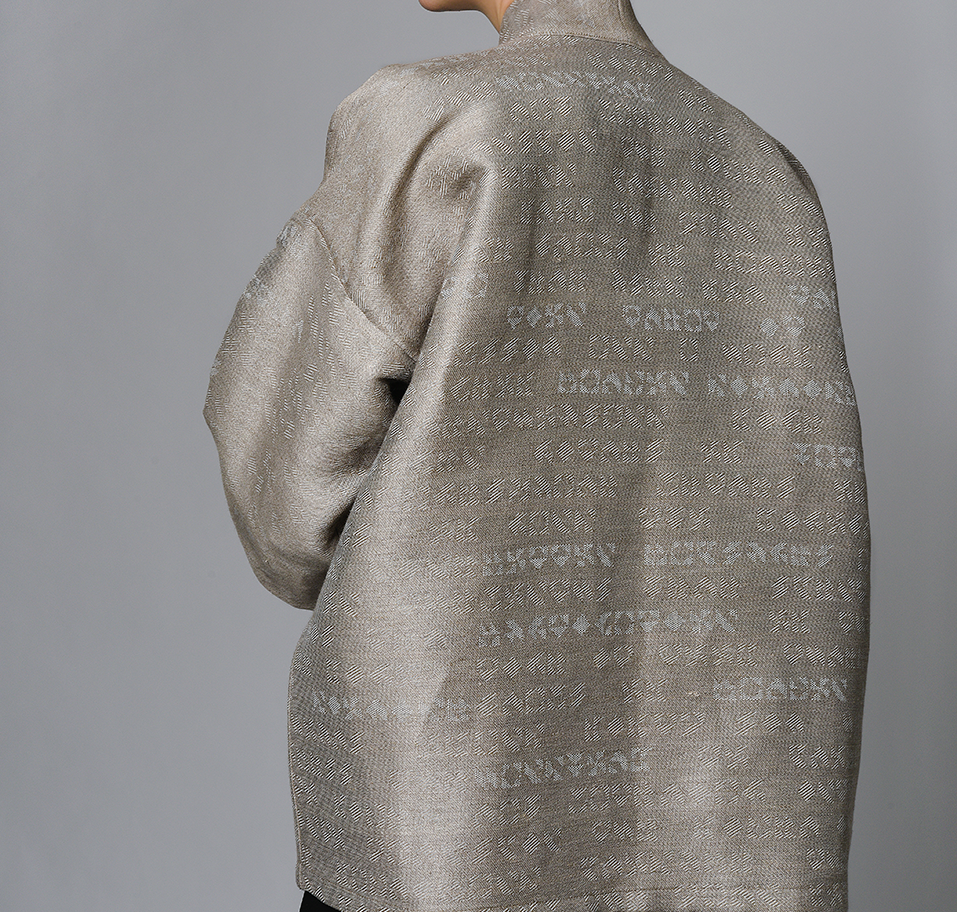
Cellulosic textile waste from the production process – such as short fibre waste, selvedges or long yarn waste – is selected carefully according to fibre quality and colour and spun into new yarn with a small amount of added virgin fibre content. Since the available waste is constantly varying in quality, texture and colour, each yarn is unique. The yarn is woven into double-sided textiles, which include an individually chosen text on one side, and a pattern generated by the Re.code software on the other side. Depending on the text, a different pattern is generated, which is woven or knitted, making the textile a personalized unique piece. Re.Code is a counter-design to serial mass production, exploring the fusion of traditional textile craftsmanship and new technologies through a holistic approach.
Re.Code Software
re.code is an open-source software tool that translates text into visual patterns. It enables the integration of encoded information into textiles – whether for personalization, communication, or purely aesthetic expression. The generated patterns are derived from different typefaces, linking typographic systems with textile design.