
Project
Seabombs
Partner
Concept development in collaboration with Malu Lücking
Year
2025
How can 3D-printed stoneware structures support the restoration of coastal seaweed gardens?
Concept
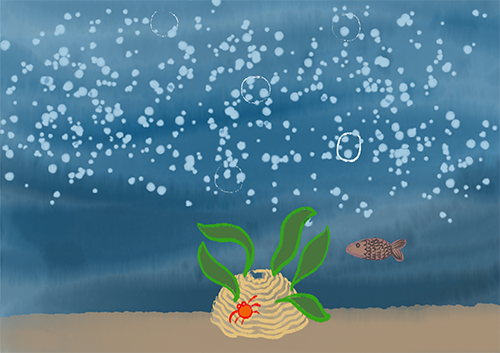
Seaweed forests are critical ecosystems: they act as major carbon sinks, regulate oceanic biodiversity, and sustain marine food webs. Yet, due to rising ocean temperatures, pollution, and agricultural runoff leading to eutrophication, these underwater habitats are rapidly declining. This project investigates how low-tech, biodegradable ceramic structures can serve as scaffolding for new seaweed growth.
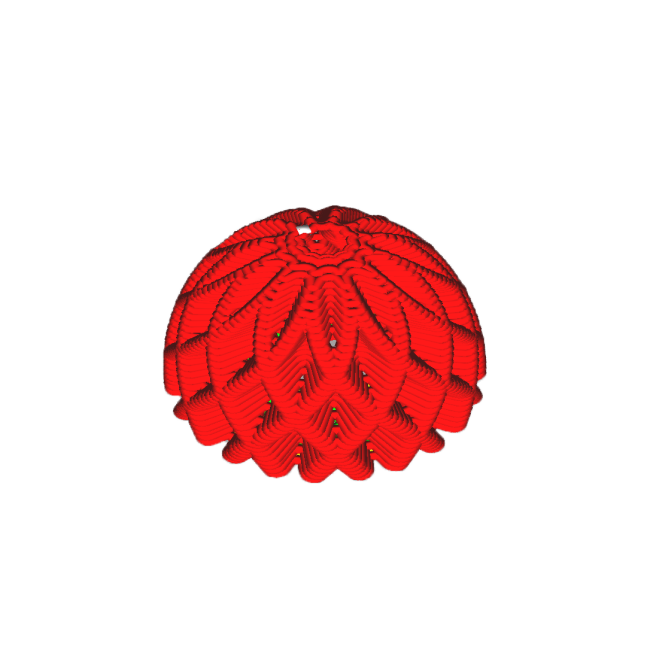
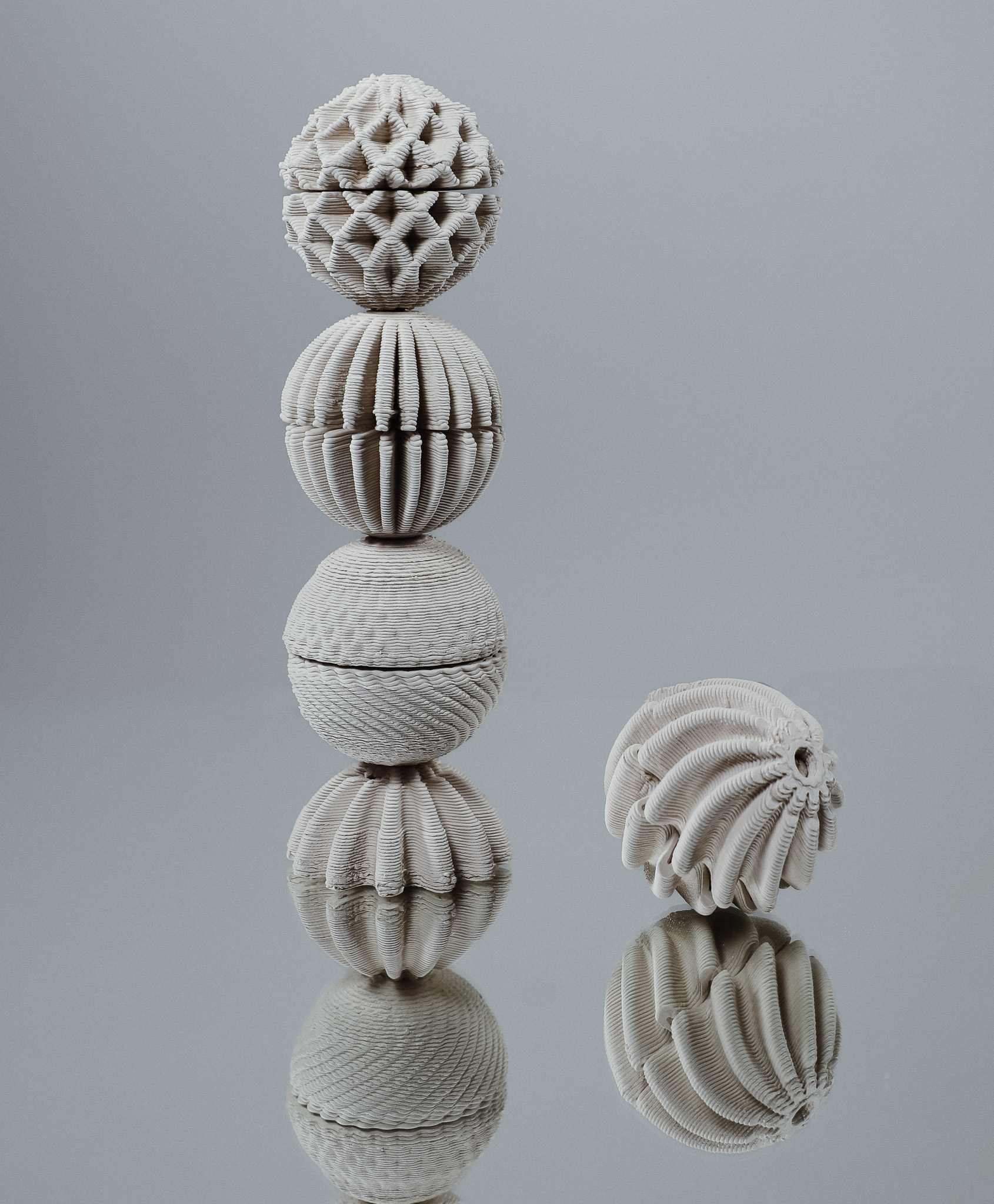
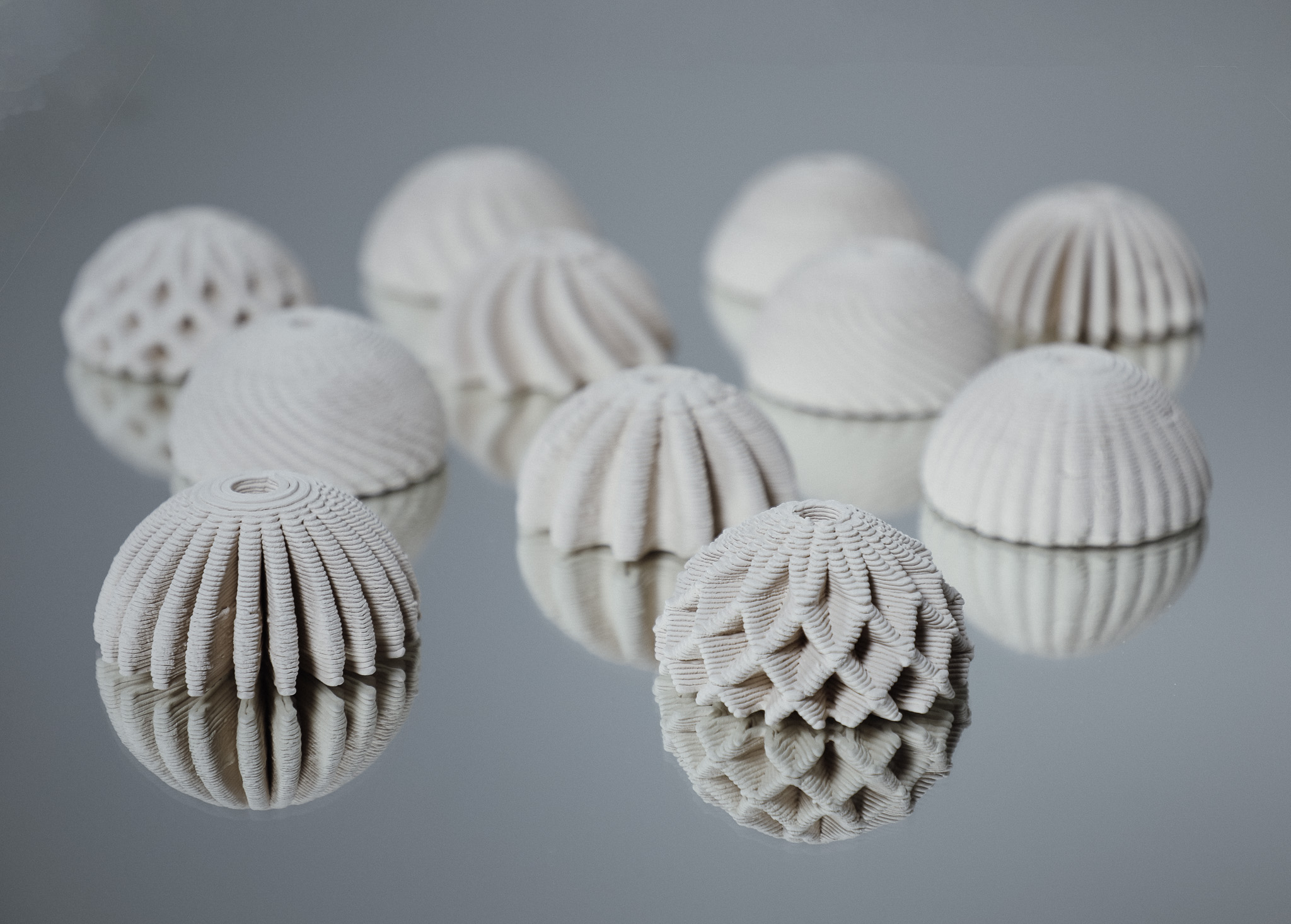
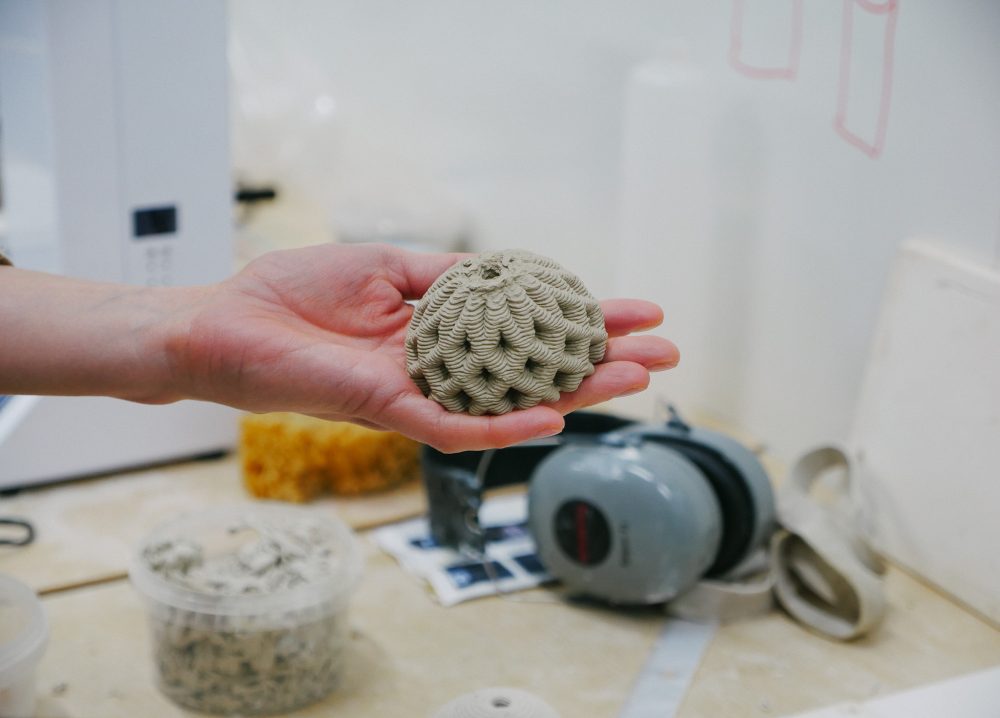
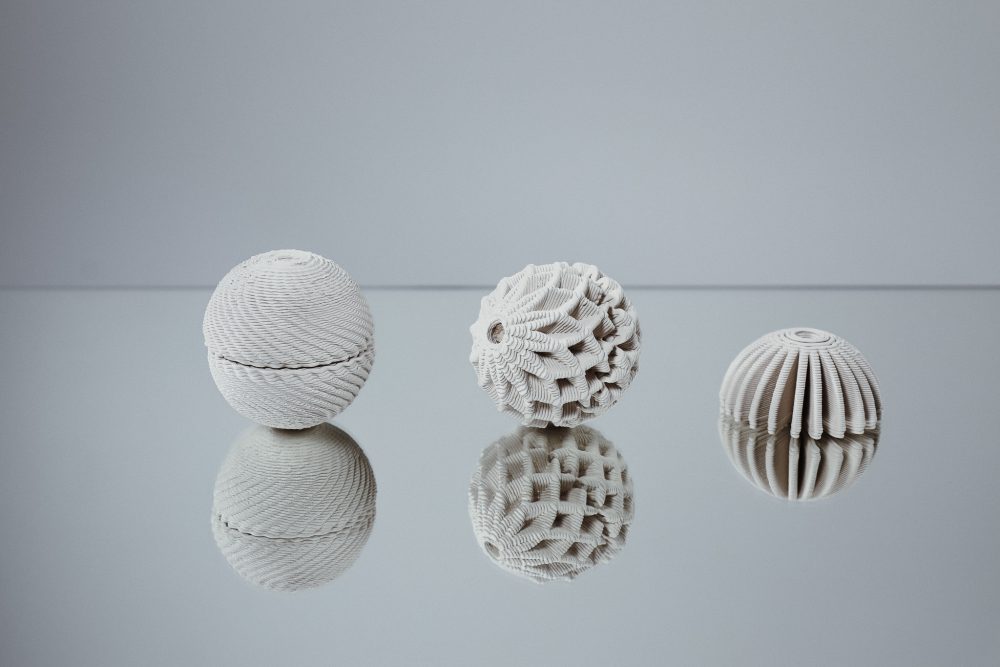
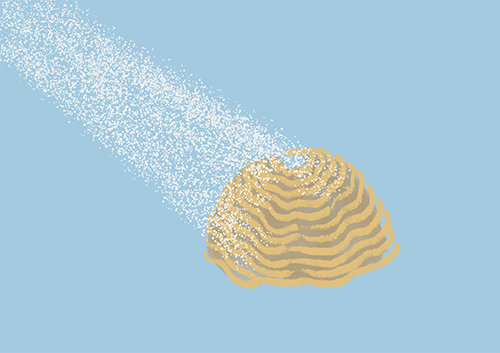
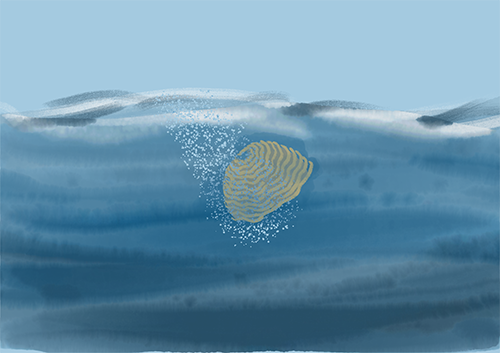
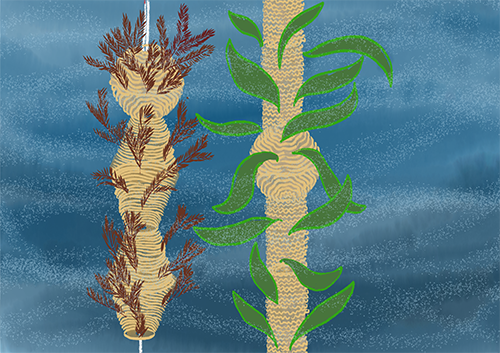
Seabombs are hand-sized, 3D-printed domes made from local clay. Their porous, textured surfaces feature geometrical pockets designed to hold seaweed spores, which are cultivated in marine nurseries before being introduced into the wild. They can be deployed in two ways: thrown into the ocean to sink naturally or strung vertically on ropes to optimise sunlight exposure. These forms mimic natural rock substrates, giving seaweed the anchorage it needs to thrive. Fired at low temperatures, the clay structures will gradually erode and reintegrate into the mineral cycle after their ecological role is fulfilled.
Community involvement is a central component. Local residents are invited to participate in all phases – from digging native clay and printing the forms using simple, site-specific clay printers, to pit firing and releasing the Seabombs into the sea. Their size is intentionally ergonomic, allowing each person to craft and contribute a single Seabomb – making coastal restoration tangible, personal, and collective.
Development
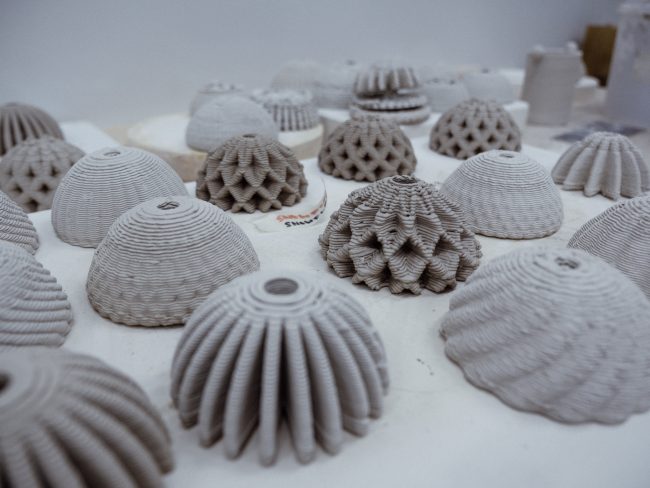
The project began with the simple geometry of a hemisphere – a form that naturally fits into the palm, making each Seabomb easy to produce, transport, and deploy. From this starting point, a series of computational design iterations explored different surface geometries, textures, and cavity configurations to create sheltered pockets where seaweed spores could attach and establish themselves.
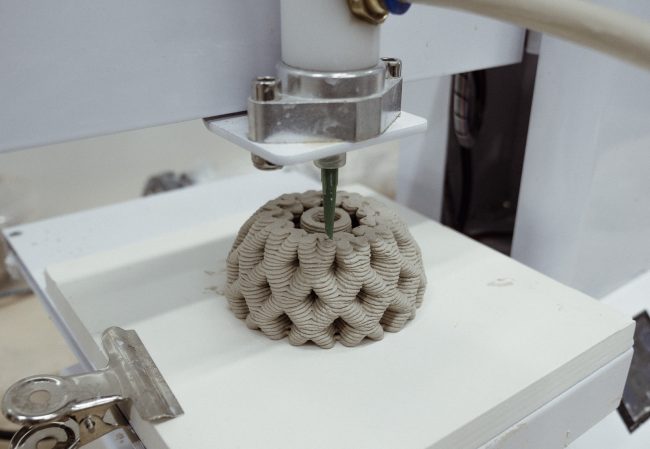
The digital models were translated into physical prototypes through clay 3D printing, allowing the geometries to be tested, refined, and compared in an iterative process. Particular attention was given to balancing structural stability, printability, and the creation of a highly textured surface that maximises the available area for biological growth.
To preserve their ability to reintegrate into the marine environment gradually, the prototypes are bisque-fired at low temperatures rather than fully vitrified. The next stage of the project is ecological field testing, where the Seabombs will be deployed in coastal environments to evaluate seaweed attachment, growth rates, durability, and long-term environmental integration.